Leafmore
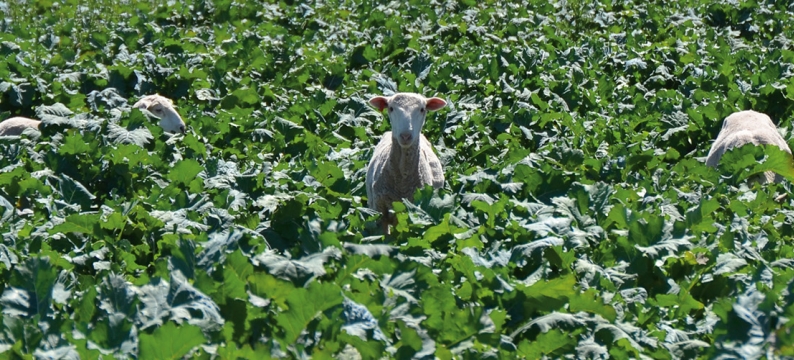
Leafmore produces high quality, high yield and exceptional re-growth to support multiple grazings.
-
High forage quality with good leaf to stem ratio
-
Excellent re-growth for 4 or more grazings
-
Vigorous establishment and high yielding
Leafmore demonstrates robust establishment, high yield, and exceptional re-growth, supporting four or more grazings.
Leafmore, with its hybrid type growth habit offers autumn or spring sowing opportunities, reducing the risk of bolting. With superior growth during cooler temperatures extending the feed window.
Depending on conditions 10-12t Dm/ha of highly palatable production is likely within one season.
Key Features
- Early maturity 8 – 10 weeks to first grazing
- Vigorous establishment and high yielding, capable of producing 12,000 kg/DM/ha if moisture allows
- Excellent re-growth for 4 or more grazings
- Suitable for autumn and spring sowing
- High forage quality with good leaf to stem ratio
- Superior cold growth habit and frost tolerance
Benefits of sowing Leafmore
- Produces very high dry-matter forage crops that are high energy and protein
- Ideal for lamb-finishing in summer as other pasture feed quality declines
- An ideal break crop for before planting a permanent pasture (e.g. Phalaris)
Performance
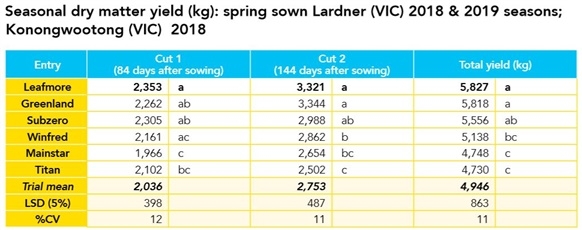
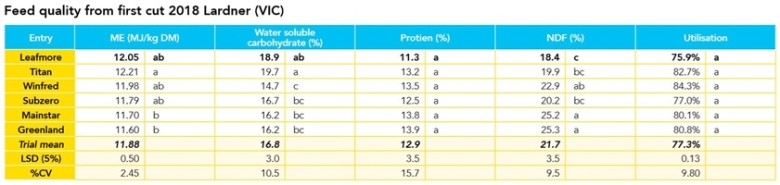
Leafmore offers greater dry matter production, time to first grazing and palatability over current varieties in the market place. It has been extensively trialled across many sites across southern Australia and consistently shows up as a superior brassica in its class.
- Agronomy and Management
Soil Type
Leafmore, like most brassicas has a high fertility requirement and well prepared soil. It is suited to well drained, loamy soils through to heavy clays.
Soil preparation
Leafmore, like most brassicas has a high fertility requirement and well prepared soil. It is suited to well drained, loamy soils through to heavy clays.
pH.
Slightly acidic to slightly alkaline 5.5–7.5 CaCl. Liming is recommended on lower pH paddocks. Leafmore doesn’t tolerate higher Al or Mn levels associated with acidity.
N
Leafmore will produce higher DM under higher N systems, but care needs to be taken with nitrate issues.
P
It is suggested that Leafmore is sown into soils of Olsen P of 15mg/kg or greater.
K
Base potassium levels will ensure maximum leaf area. S - Sulphur helps drive production, but some care with grazing issues in relation to N: S-Kale Anaemia ‘Red Water’ can develop if P levels are low.
Fertiliser suggestions
Ideally sow with a Starter N,P fertiliser E.g. 75kg/ha MAP or DAP, or Granulock 12 or similar.
Weed control
A good knockdown prior to sowing will ensure most weed problems are kept to a minimum. Check paddock history for any products that may have a residual or plantback effect on forage brassicas.
Grazing
Brassicas are high quality, low fibre forages that need some management to achieve best results. Introduce stock slowly to Leafmore, allow access for 2–3 hours a day initially, gradually increasing. Incorporate a grass run off area and/or alternative fibre sources, E.g. Hay in the corner (needs to be at least 25% of the diet). Cows are likely to eat 4–5kg/ha DM forage rape per day, (and as a rule – it should only be 30% of their diet). Allow access to good quality water and monitor stock, especially relating to issues such as nitrate poisoning, periods of plant stress, photosensitization. Remove stock during such time.
Paddock & Grazing Management
Brassicas are high quality, low fibre forages that need some management to achieve the best results;
- Introduce stock slowly to Leafmore. Allow access for 2-3 hours a day initially, gradually increasing. Incorporate a grass run off area and/or alternative fibre sources Eg Hay in the corner (Needs to be at least 25% of the diet)
- Cows are likely to eat 4-5kg/ha Dm Forage Rape per day, and as a rule – it should only be 30% of their diet
- Allow access to good quality water
- Monitor stock- especially relating to issues such as Nitrate poisoning, periods of plant stress, photosensitization. Remove stock during such time
Pest Resistance
Like any brassica, establishment pests such as red legged earth mites, lucerne flea and cockchafer can be a problem. Barenbrug recommends the use of Gaucho Insecticidal seed dressing to offer 2–3 weeks protection from time of sowing. Careful monitoring is also required to ensure abnormal pressure or attacks do not occur outside the protection window. Once temperatures warm up and the plant reaches grazing maturity, diamond back or cabbage moth (Plutella) can cause severe defoliation. Due to their rapid lifecycle, careful monitoring, strategic grazing and timely insecticide application can assist. SP insecticides (E.g. Sumi AlphaFlex) are registered and work better when coupled with higher water rates, spraying later in the day and using feed additives. For severe infestations Bt insecticides (E.g. Success & Mimic) achieve better results. Observe all label recommendations and stock withholding periods.
Disease Resistance/Tolerance
Leafmore has natural levels of glucosinalates, which act as a biofumigant against some soil borne diseases and offers a great rotation to cereals and grasses. Like all forage brassicas however, it does host and suffer from Blackleg, and great care should be taken when sowing in canola areas. It is not recommended to sow Leafmore into canola stubble, nor canola into Leafmore stubble.
Specifications
| Name | Value |
|---|---|
| Rainfall requirement (min) | 450mm-750mm |
| pH | 5.5-8.0 |
| Soil type | Heavy loam & clay |

Leafmore