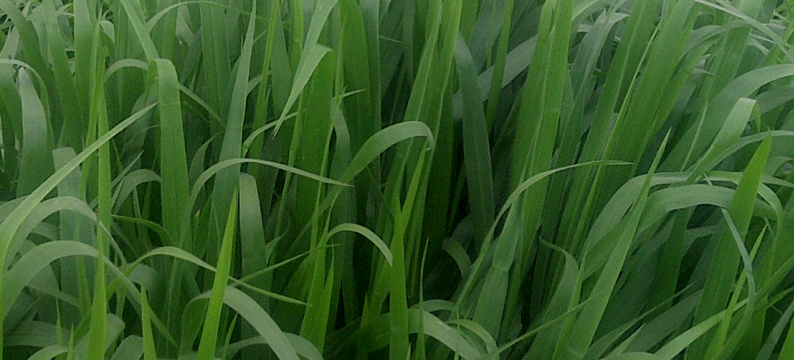
Mulato II
Best sown as a stand-alone grass species.
-
Strong persistence, even under seasonally dry conditions
-
Suitable for direct grazing, cut-and-carry methods, bailing and silage
-
Well adapted to acid soils and tolerates high aluminium levels

Mulato II is one such three-way hybrid, being the result of three generations of crosses and screening carried out by CIAT’s tropical forages project. Mulato II was developed at CIAT in Colombia from an original (B. ruziziensis x B. decumbens) cross. This was followed by two generations of hybridisation by open exposure to B. brizantha pollen in the field, which then was commercially released by Grupo Papalotla in 2004. This variety is the second Brachiaria hybrid developed by CIAT.
Growth Habit
Low growing, leafy perennial grass with a mostly semi-erect growth habit, spreading by rooting from lower nodes. Leaf canopy to 80cm above ground height.
Compatibility
Best sown as a stand-alone grass species. Will combine with aggressive creeping and twining legumes. Persistence of these legumes over time will be dependent on grazing management as many of these legumes may be less tolerant of intensive grazing.
Uses
Permanent pasture suited to beef and dairy production.
- Agronomy and Management
Establishment
To avoid slow establishment associated with cool soils, sow during summer months in the sub-tropics and elevated tropics or spring/summer in tropical coastal areas. Seed can be drilled or broadcast and being a small seed, should be planted ideally at 5mm and no more than 1cm deep. Seed to soil contact is important, with best results achieved by planting into a freshly prepared seedbed. The use of press wheels or, on non-hard setting soils rolling after sowing, will greatly improve germination and establishment. Best sown when conditions are warm and humid, into moist soil and a strong chance of follow up rain.Fertiliser / Nutriton
N and P fertiliser is recommended at sowing, banded away from the seed. Responds strongly to nitrogen (N) fertiliser. In high production beef-finishing systems without legumes, minimum application of 100–150Kg/Ha of urea to maintain productivity is recommended, higher in split applications if higher production is sought. For tropical dairying, up to 350/Kg/Ha/year of fertiliser N can be applied. Applications of phosphorus (P), potassium (K) and sulfur (S) are recommended every 3−4 years in high production systems to overcome soil deficiencies. A maintenance fertiliser program is recommended to replace nutrient removed by grazing or hay cutting over time, particularly at the high stocking densities. The use of a soil test will form the foundation of a suitable fertiliser program.Management
The success of a pasture will depend on grazing management in the first season. Graze lightly within 4 months of planting to encourage early plant development. Tolerates heavy grazing well, being very tolerant of cutting and grazing by cattle once established. These varieties can be grazed at high stocking rates suitable for dairy and beef finishing in the humid tropics and sub-tropics.Persistence
The strong perennial and persistent characteristics of these varieties make them a suitable fit for long term pastures. Establishes in the field rapidly, achieving 85% ground cover at 2 months after planting. These varieties have excellent drought tolerance, re-establishing quickly after long dry periods due to their robust root system, which enables them to have rapid regrowth at the onset of the wet season. Its pubescent leaves allow it to efficiently use moisture deposited on the leaves by the evening dew until late the next morning. It is the ability of Hybrid Brachiaria to maintain green leafy dry matter during the dry season (85% leaf ratio) that makes it outstanding dry season forage. Long term persistence is dependent on adequate nutrition, moisture and ideal grazing management.Toxicity
None reported, but may cause skin photosensitisation in some livestock species.
Specifications
| Name | Value |
|---|---|
| Sowing rates | Irrigated: 8−10kg/ha |
| Rainfall requirement (min) | 700mm |
| pH | 4.5-8.0 |
| Sowing rates | Marginal dryland: 4−6kg/ha |
| Sowing rates | Ideal dryland: 6−8kg/ha |

Mulato II