Bombardier
A high yielding kale that provides excellent winter feed for cattle and dairy.
-
Excellent winter feed for cattle and dairy
-
Reduced risk of club-root
-
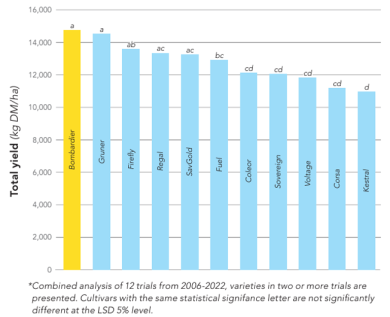
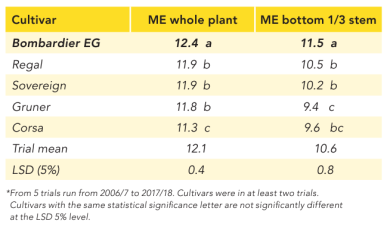
Has better ME and utilisation than other tall kales
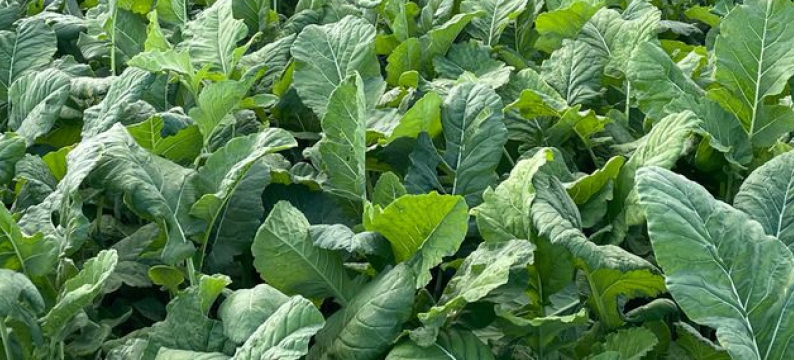
Bombardier is a medium-tall, high yielding kale that provides excellent winter feed for cattle and dairy.
It is a marrow stem variety, with soft nutritious stems offering increased overall metabolisable energy and greater utilisation.
It has winter hardiness and good club root tolerance, and is an excellent option for creating a high yielding crop of quality feed in mid-winter.
Key Features
- Provides excellent winter feed for cattle and dairy
- Maturity in 5-7 months.
Benefits of sowing Bombardier
- Large yield advantage over forage rape or turnips
- Reduced risk of club-root in tight brassica rotations
- Supports a high percentage of the feedbase when feed is short in winter
- Low cost of production, especially when compared with maize
- Marrow-stem kale:
- High utilisation – less waste, efficient production
- Better suits on-off grazing and potentially less mud creation
- Exceptional feed quality – animals get more ME per bite
Performance
Kale Feed Quality
Metabolisable energy (ME) as MJ ME/kg DM
- Management and Agronomy
Bombardier kale is suited to temperate medium-higher rainfall or irrigated locations with optimal growth between 12 - 28°C.
Good paddock preparation will aid establishment. Use methods such as stale-seed bed, or a targeted herbicide program to reduce the weed-seed burden in the paddock, especially broad-leaved weeds. Application of slug bait may be an important consideration.Bombardier is best sown with soil temperatures of at least 12°C in late spring or very early autumn.
Kale is slow to establish and crop protection for pests is critical to protect developing seedlings.Bombardier will require good fertility to achieve yield targets. As a guide, consider making the following nutrition available though a combination of back-ground soil fertility, pre-spreading, at sowing and top-dressing:

High-yielding crops are also highly likely to require boron, molybdenum, zinc and copper where levels are historically low or these trace elements are not other-wise in the farm program. Soil and tissue testing are highly recommended to help refine the fertiliser plan.Remember that brassica crops are fed ‘in-situ’ so that the majority of applied fertiliser is in fact returned to the paddock. Brassica crops such as Bombardier kale therefore allow a highly productive stepping-stone to fertility improvement and a large component of the fertiliser cost may be considered a capital investment.
Grazing and Animal Health
• Introduce animals slowly over a period of 7-10 days. Break fencing or a small paddock may assist
• Animals may not have previously grazed brassicas and may take a few days to start accepting it
• Diet 70-80% maximum as brassica for beef cattle and sheep, 30% maximum for lactating dairy stock
• A source of fibre may be needed to assist rumen function – e.g. straw, dry feed, silage, pasture run-off etc
• Measure yield and allocate feed through break-fencing and consider a second ‘break-out’ fence for safety
• Have ample clean drinking water available
• Animal performance may benefit from additional trace elements such as Cu, Se, I, Mg
• Stock should be up to date with vaccinations.Possible Co-species
Kale is relatively slow establishing and as it takes 5-6 months to achieve maximum yield, it is usually sown as a sole stand. There has been utility in sowing 0.25 – 0.5 kg/ha of a ‘keeper’ turnip (long-season) such as Green Globe, although benefits seem to be marginal. Kale may be sown with other faster-maturing species without any concern, although it may be more economic and of greater benefit to consider other faster establishing brassica species such as forage rape or leafy turnips. These options typically offer more feed in a shorter growing window and will offer improved prospects for re-growth and subsequent grazings.

Specifications
| Name | Value |
|---|---|
| Sowing rates | High rainfall/Irrigated: 6-8kg per hectare |
| Sowing rates | Marginal dryland: 6–8kg per hectare |
| Sowing rates | Good dryland: 5kg per hectare |
| Sowing depth | 5-10 mm |
| Treatment | Poncho |
| Pack size | 25kg |

Bombardier