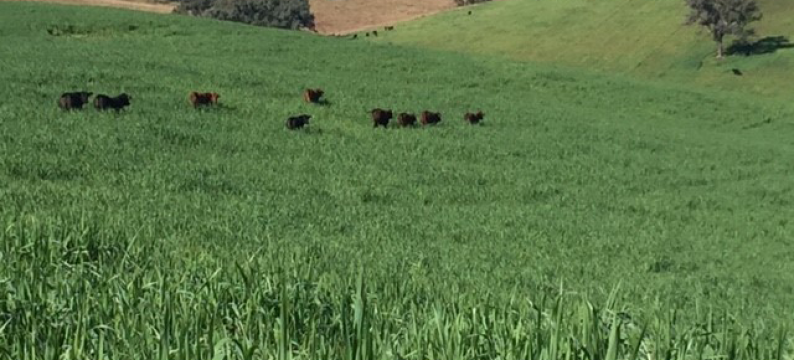
Mitika
Early maturing dwarf milling variety with improved grain quality and disease resistance.
-
Early maturing dwarf type
-
Excellent feed value
-
Superior grain size and low screenings
Mitika is an early maturing dwarf milling variety with improved grain quality and disease resistance compared to Echidna and Possum across all rainfall zones. Yields are comparable to Echidna. The grain quality of Mitika meets milling standards. Summarised over all sites and years, Mitika’s physical grain quality is similar or an improvement compared to other milling varieties including Mortlock. Groat yield is the percentage of the whole oat which remains after the husk is removed. High groat yield, which relates to commercial milling yield, is a high priority with processors and the highest priority in the selection of milling varieties.
Key Features
- Early maturing dwarf type milling and feed grain oat
- High yielding –suitable for various rainfall areas
- 9% higher yielding than Possum in low rainfall environments
- Heads 5 days earlier than Echidna
- High groat percentage
- Low husk lignin and high digestibility, excellent feed value
- Superior grain size and low screenings
- Good straw strength and standability
- Resistant to stem rust in southern Australian and moderately resistant to leaf rust and bacterial blight in southern Australia
Performance
In trials conducted in South Australia and Victoria over 5 years, it found that Mitika yields were comparable to Echidna and 9% higher than Possum in low rainfall zones. Mitika was found to have similar yields to Echidna across all sowing times. Screenings percentage is lower than all other milling varieties with grain size being better than Possum. Protein levels were found to be high with a favourable groat percentage.
- Management & Agronomy
Disease Resistance
Mitika is an improvement compared to Echidna and Possum for stem and leaf rust resistance and bacterial blight resistance. It is not suited to areas where CCN or stem nematodes are a problem.Herbicide Tolerance
Mitika was tested for tolerance to herbicides by the South Australian Field Crop Evaluation and Agronomy Program at a trial sown at Hart in 2004. There was no effect on yield for applications of Ally, 2,4 D Amine, Diuron / MCPA, Dual / Diuron applied post sowing, pre-emergence Eclipse / LVE MCPA and Glean. Mitika suffered a significant yield loss at recommended and twice recommended rates of Banvel M, Broadstrike, Brominil M, Terbutryn and Tigrex. Possum had significant yield losses for the same herbicides.Variety Management
Mitika should be treated in a similar way to other milling and feed oats except where reference has been made to specific issues in this brochure.Annual rainfall - suitable for low (300mm) to medium (800mm) annual rainfall areas.
Area of adaptation - Mitika has performed well in all rainfall locations where cereal cyst nematode and stem nematode are not a problem. It is well suited to the milling and feed oats areas of southern and central NSW, Victoria and South Australia. Mitika’s consistent high yield, improved stem and leaf rust resistance and low screenings should see Mitika replace varieties such as Echidna and Possum in these areas.
Specifications
| Name | Value |
|---|---|
| Sowing rates | 60-100 kg p/h |

Mitika