
Rohan SPR NEA2
Purpose bred to give sheep and beef farmers persistent, easy-care pasture.
-
Bred predominantly for persistence
-
Unique spreading habit & tiller density
-
Tough, resilient ryegrass
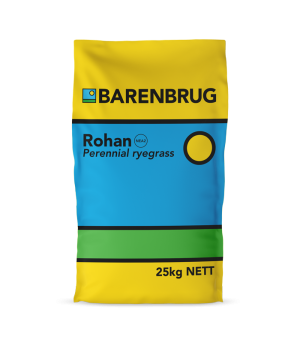
Rohan spreading perennial ryegrass (SPR) has been purpose bred to give sheep and beef farmers persistent, easy-care pasture. Its unique spreading habit can help Rohan SPR fill bare areas in pasture and recover faster after adverse climatic events. Rohan SPR is palatable, late flowering and comes with NEA2 endophyte for great animal health.
Key Features
- Exceptionally densely tillered
- Late flowering (+18 days vs. Nui)
- Tough, resilient ryegrass
Benefits of sowing Rohan SPR
- Improved pasture persistence under set stocked/heavy grazing conditions, as its breeding focus was predominantly on persistence.
- Better tolerance to drought, pugging and insect attack through very high tiller density (more tillers = greater overall pasture density = more tillers to kill before pasture density becomes an issue, as well as improved recovery from damage.
- Good yield potential - Rohan’s yield potential is 5–10% below leading varieties such as Impact 2, but this difference is not visually noticeable. Rohan SPR suits difficult sites where persistence is a key requirement, and works particularly well in blends for good areas which can be prone to tiller damage through drought, pests and pugging.
- Improved quality through late spring, with reduced seed-heads so that it stays leafier, greener and better utilised than other cultivars through the spring seeding period.
- Bred for persistence under grazing
- Productive in tough conditions
- Good tolerance to treading and pugging
- Produces lateral tillers to fill bare areas
- Resistance to a wide range of insects
- Grazing safe for sheep and cattle
- Agronomy and Management
Fertiliser
For best performance, soil fertility and acidity problems should be amended prior to sowing. It is usually best to plant ryegrass with 60−100 kg/ha of MAP or DAP at sowing to provide some starter phosphorus and nitrogen.
Weeds
Prior to sowing a perennial pasture, 18 months to 3 years of pasture renovation should take place, to amend any fertility issues and reduce the weed and pest burden of the paddock. A knock-down herbicide (such as glysophate) is the best applied prior to sowing if weeds are present.
Grazing
Ensure the first grazing doesn’t take place until the plants are sufficiently anchored. Use your hand to pull on the plants at grazing height, if the plants remain in the ground, then grazing can commence. Ideally, ryegrass should be rotationally grazed for optimal growth. To do this, graze at the 2.5−3 leaf stage, then let the plants rest again to the 2.5−3 leaf stage to recharge the carbohydrates levels to enable better growth rates.
Specifications
| Name | Value |
|---|---|
| Ploidy | Diploid |
| Beneficial endophyte | NEA2 |
| Rainfall requirement (min) | 600mm+ per year |
| pH | 4.8-8.0 |
| Sowing rates | 15–20 kg/ha into a clean, weedfree seed-bed with adequate soil fertility. |
| Sowing depth | Ryegrass can be sown at 5–20 mm, however if sowing in a mix with clover, try to keep the sowing depth between 5–10mm. |

Rohan SPR NEA2