
Supercharge Weight Gain With Oats
Discover the power of oats and short-term ryegrass mixes for animal feed.
Our study reveals it not only boosts yield and nutritional value, but leads to improved live weight gain and return on investment, whilst also providing benefits to greenhouse gas emissions per unit.
In this technical document, we dissect the comparative advantages of using 100% Oats versus an innovative blend of 80% Oats and 20% Annual/Italian ryegrass in animal feed.
Drawing from extensive research and numerous studies, we reveal that the ryegrass mixture not only enhances protein levels but also reduces fibre, leading to improved Metabolisable Energy (ME). It’s not just about nutrition though. Our findings show that this unique blend can significantly boost weight gain potential in cattle, leading to higher live weight (LWT) gain.
But there’s more to this story. We delve into how the sowing rate of oats can be increased for autumn and winter feed, with the introduction of ryegrass resulting in a notable leap in yield. In fact, the ryegrass mixture resulted in a 26%-38% increase in dry matter yield compared to straight oats. This translates into a substantial 44% Return on Investment (ROI), making it a financially attractive option.
The benefits don’t stop at yield and profit. The use of this mixture potentially allows optimisation for quicker turn-off times, reduced planting area, and increased stock numbers. It even contributes to the reduction of greenhouse gas emissions per unit product.
We invite you to explore these findings and more in our comprehensive analysis.
Let’s delve into the world of animal feed optimisation and uncover the potential of oats and ryegrass mixes.
Research Summary
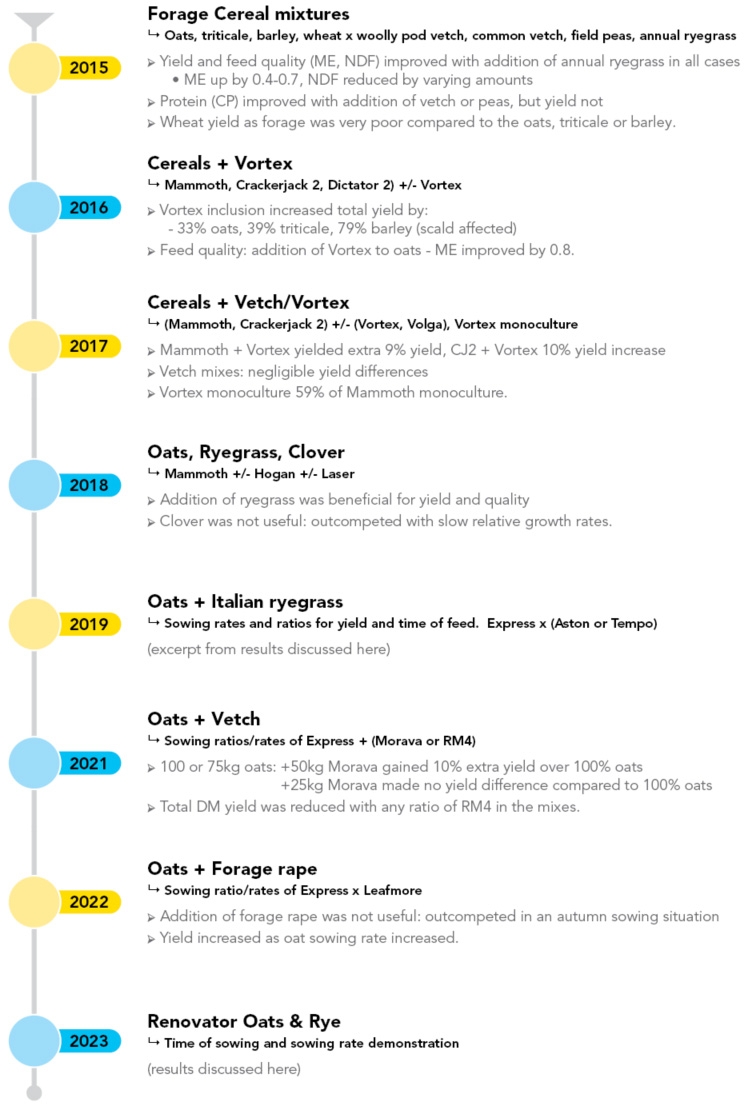
Forage cereal mixes with short-term (annual or Italian) ryegrasses is a widely conducted practice Barenbrug have been investigating the relative merits of forage cereal and co-species mixtures at the Howlong Research Farm since 2015. Trials and demonstrations with forage cereal co-species conducted to date include:
Sowing Rates and Time of Sowing
| Assumptions and Notes: | |
|---|---|
Renovator Oats & Rye Mix 70% Express Oats Rates: 60, 80, 100 kg/ha | Based on trial and demonstration measurements from Howlong 2016-2019. Results are not replicated, and indicative only. Feed protein is considered non-limiting. Indicative seed retail pricing only – prices may vary. Cereal hay price Elmore November 2023, $285 per tonne, 88% DM 400kg feeder steer, $2.90/kg LWT, MLA November 2023. Cattle LWT gain potential = (Total energy intake - (0.145 x LWT)) / 40 Cattle are in nominal health No additional in-paddock treatments or crop management required. No allowance for overhead costs or finance Does not include GST. |
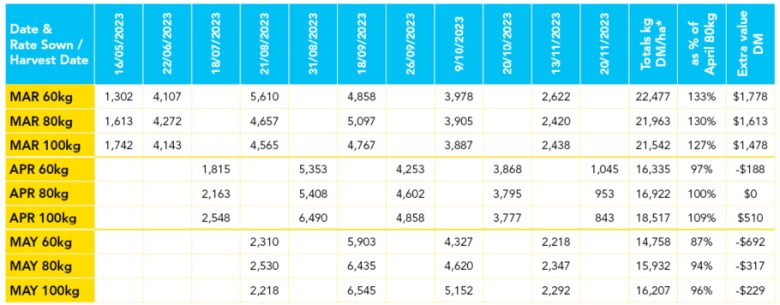
Renovator Oats & Rye Time of Sowing x Sowing Rate Demostration, Howlong 2023
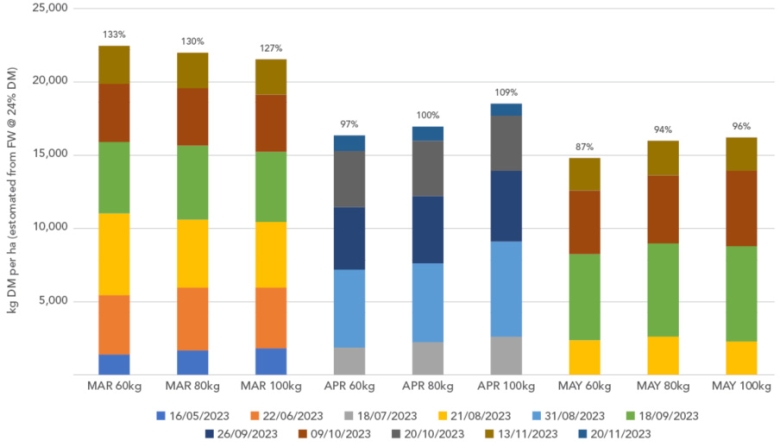
Early sowing offers around 30% yield benefit compared to a mid-season (April) sowing. Higher sowing rates early offer increased feed early, although in early spring lower sowing rate offers slightly improved total yield prospects, possibly due to improved individual plant tillering capacity. Mid and late season sowings see slight overall benefits from higher sowing rates (9-12%) compared to the lower rate.
Key Take-Aways:
- Sow early if possible (March), and lower sowing rates may be considered.
- If sowing later, increase the sowing rate to achieve higher yield potential.
Marginal Benefit Analysis – Oats vs Oats & Ryegrass
| Assumptions and Notes: | |
|---|---|
| 100% Oats | Based on trial and demonstration measurements from Howlong 2016-2019. Results are not replicated, and indicative only. Feed protein is considered non-limiting. Indicative seed retail pricing only – prices may vary. Cereal hay price Elmore November 2023, $285 per tonne, 88% DM 400kg feeder steer, $2.90/kg LWT, MLA November 2023. Cattle LWT gain potential = (Total energy intake - (0.145 x LWT)) / 40 Cattle are in nominal health No additional in-paddock treatments or crop management required. No allowance for overhead costs or finance Does not include GST. |
Feed Quality Comparison as Silage, Howlong 2016
(Mammoth oats, Vortex annual ryegrass, harvested at boot stage/early flowering)
| % Seed sown w/w | Metabolisable Energy | Crude Protein | Neutral Detergent Fibre |
|---|---|---|---|
| Oats 100% | 9.3 | 14.6 | 55 |
| Oats 80% + Ryegrass 20% | 10.1 | 17.5 | 52 |
Note the improvement of 0.8 for ME, reduced fibre and improved protein for the ryegrass mixture.
Animal Performance Potential
| Oats 100% | 0.507 kg/hd/d |
|---|---|
| Oats 80% + Ryegrass 20% | 0.771 kg/hd/d |
| Dry Matter Intake | 7.64 kg/hd/day |
|---|---|
| Metabolisable Energy Intake | 71.02 MJ ME/hd/day |
| Dry Matter Intake | 8.08 kg/hd/day |
|---|---|
| Metabolisable Energy Intake | 81.58 MJ ME/hd/day |
Key Take-Aways:
- The addition of ryegrass to oats has a positive impact on forage quality in terms of ME, NDF and CP at time of silage harvest and subsequently post harvest.
- Comparing the quality at silage harvest alone, the improved quality due to the ryegrass results in a potential 52% increase in daily live weight gain.
Yield and Sowing Rates Comparisons, Howlong 2019
Express Oats, Aston Italian Ryegrass
2019 Forage Cereal + Ryegrass Demonstration, Howlong, Sown 5th May 2019, GSR = 244mm
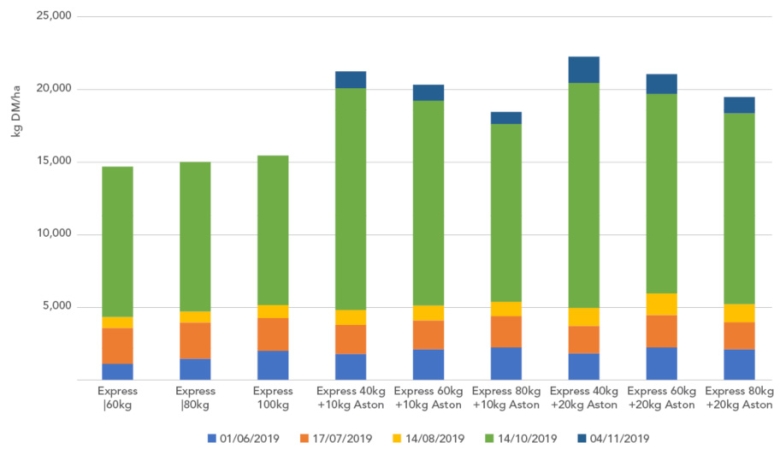
Increased sowing rate of oats was beneficial, particularly for autumn and winter feed, but marginal overall. Addition of ryegrass saw a step-change for yield, especially in spring and, also allowed a potential post-silage grazing opportunity (dark blue). Increasing Italian ryegrass rates is beneficial, although only marginally in this trial. Similarly, once ryegrass was included in the mix, further increases in oat sowing ratio reduced the spring yield totals. This observation may be a little confounded by a dry finish and more generous spring conditions may offer contrary information. Ryegrass mixes displayed in figure 2 exhibited from 26% to 38% DM yield increase over straight oats.
Financial Implications for Yield
(Opportunity cost/benefit of extra yield in terms of dry matter (DM) as bought hay and extra seed cost deducted.)
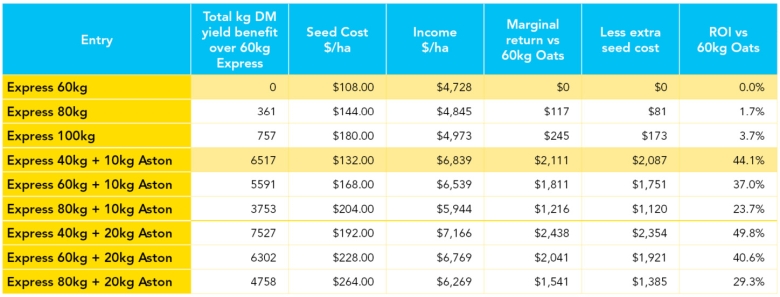
Highlighted in yellow are two typical on-farm options used in forage cereal grazing areas. Extra $24 per ha in seed costs, all else being equal, offers a 44% ROI in terms of dry matter produced.
Feed Budget Implications From Yield and Feed Quality
| Assumptions and Notes: |
|---|
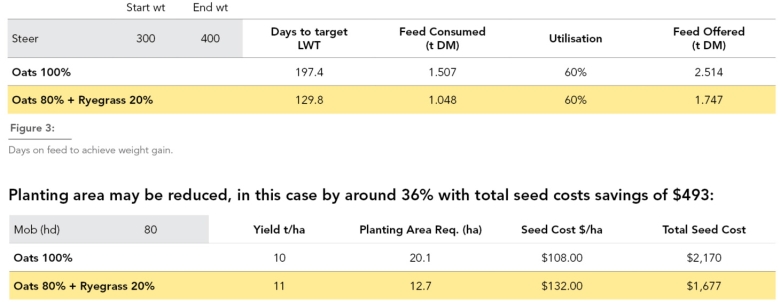
| Cattle turned on at 300kg and turned off at 400kg, with linear weight-gain (for simplicity). 60% feed utilisation. Requires rotational grazing and feed-base management. Modest (10%) yield increase (25-35% seems readily achievable) Methane emission rate of 20.7g per kg DM consumed – IPCCC Methane as GHG equals 28 units of CO2-e Carbon price of $32 per tonne CO2 – October 2023 |
Days on Feed: Estimated stock turn-off is around 60-70 days faster
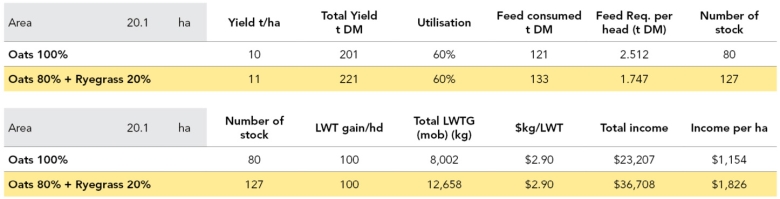
Increase stock numbers, and income.
Potentially, an extra 47 head may be carried and income improves by $672 per ha:
Carbon emissions intensity is improved by 30.5%:

Key Take-Aways:
- 70-80% oats + 30-20% short-term ryegrass is a highly rewarding and flexible option compared to oats alone.
- Animal performance potential may increase by around 34%.
- Crop yield may increase up to 36%.
- Time on feed may be significantly reduced, allowing for faster turn-off.
- Stocking rates may be increased or area planted may be reduced.
- Total seed costs per income received is significantly reduced.
- Green-house gas emissions may be reduced by around 30% per unit product.
Practical Application and Discussion
The potential benefits of oats and ryegrass mixtures have been demonstrated for the producer.
Improved Yield Prospects:
- Total yield
- Late season yield (silage post-harvest grazing potential)
- Income per hectare: ROI
Improved Feed Quality:
- Faster animal LWTG
- Carry more stock, or
- Reduced planting area
- Reduced GHG per unit product
Advice for Sowing Cereal & Ryegrass Mixtures
Such mixtures may be avoided or not recommended to producers who are looking to control annual ryegrass in their cropping programs, although a competitive oats/ryegrass crop and subsequent silage making may in fact be a beneficial tool in this respect.
Temperature:
Ryegrass germination starts to decline above 25°C, and halves at around 30°C, with germination ceasing at around 35°C. This may mean ryegrass mixes may need to have delayed sowing in some areas to allow for cooler conditions. Ryegrass will not grow over 30-32°C day-time or over 25°C night-time temperatures, which may also need to be considered. Air-temperature may not be a 100% useful guide however as an irrigated sward may have a some-what lower temperature than ambient due to evapotranspiration.
Sowing Depth:
Ideally ryegrass should be sown at 5-15mm, and cereals 10-25mm. We recommend a sowing rate of 10-15mm for these cereal/ryegrass mixes. Sowing equipment, furrow presentation and soil-type may also need to be allowed for. Alternatively, some drills allow for dual sowing, in which case the grass and cereal may have their own sowing depths and seed need not be mixed. This latter scenario may suit some circumstances where mix delivery time-frames may not be met, or where mix components come from different sources.
Varieties to consider:
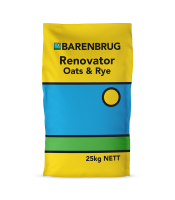
Renovator Oats and Rye
-
Ideal for grazing, hay or silage
-
Excellent early autumn feed which will continue well into winter & spring
Express
-
Early growth is quick and vigorous
-
Excellent recovery from grazing
-
Good BYDV tolerance
Renovator Oats and Vetch
-
Improve digestibility and overall animal performance
-
Aids soil health through nitrogen fixation
-
Excellent yield for reliable bulk