Why the Right Grass-Endophyte Combo are Key
Farming is rarely predictable. Every season brings a new set of variables, from rainfall patterns to pest pressures, that test the resilience of your feedbase. Lets take a research backed look at the persistence and productivity of endophytes, and allow the results to speak for themselves.
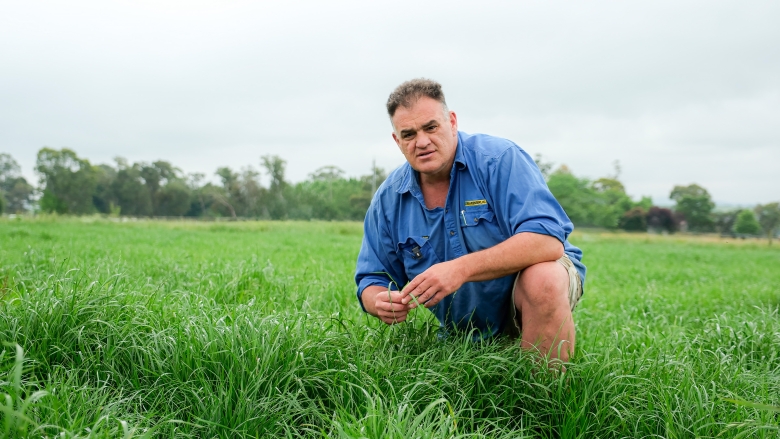
We recently visited our research agronomist, Damien Adcock, at our trial site in Ellinbank, West Gippsland. The data collected from these trials clearly shows that the NEA endophytes are holding their ground, and often excelling—alongside the best in the market.
But the real takeaway isn't just about one endophyte strain versus another. It is about understanding that the solution to your specific farming challenge lies in the combination of the right grass genetics working in balance with the right endophyte.
A Season of Extremes: The Ultimate Stress Test
To understand pasture performance, you must first understand the conditions it survived. The 2024 trial at Ellinbank provided a brutal testing ground for perennial ryegrass.
As Damo explained standing in the trial plots, the season started reasonably well with a sowing in mid-April 2024. However, conditions deteriorated rapidly. From August through to late spring and summer, the region experienced below-average rainfall every single month. This dry spell was followed by one of the hottest autumns recorded in recent history.
While there was a brief reprieve with 40mm of opening rain in March, the subsequent months of April and May saw exceptionally low rainfall. This created a 'false break' scenario—a nightmare for persistence—making it incredibly difficult for perennial ryegrass to rebound in autumn.
It is easy for varieties to look good when the rain falls and the sun shines. But a season like this, characterized by moisture stress and heat, separates the resilient performers from the rest. This is exactly where the value of independent PTN trials becomes undeniable. They strip away the marketing gloss and show you exactly what is happening in the paddock.
The Verdict on NEA2 Persistence
Despite the challenging conditions, the Barenbrug plots tell a story of resilience. Looking down at Barenbrug’s Array Perennial Ryegrass containing the NEA2 endophyte, the difference in ground cover and plant health was visibly impressive.
Array, a late-heading diploid (+23 days), is known for its upright growth habit and high tiller density. Even after the punishing dry spell and pest pressure, the stand remained dense and productive. Similarly, 4front NEA2, a tetraploid variety (+18 days), showed excellent leafiness and cover.
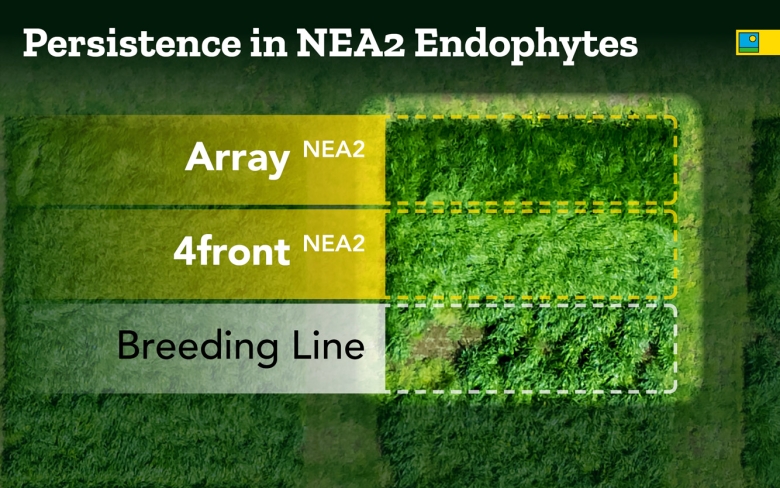
Damo noted specifically that these plots demonstrated thatthe NEA2 endophyte holds up exceptionally well after a very tough season. The plants were not just surviving; they were maintaining the density required for long-term productivity.
This demonstrates the ability of Barenbrug varieties (with NEA endophytes) capability to persist and thrive in challenging sites and seasons. When you pair a robust endophyte like NEA2 with superior genetics like Array or 4front, you create a pasture system capable of weathering the storm.
The Comparison: Context Matters
In any trial, context is king. It is important to look at how other varieties performed under the exact same pressure.
In the trial plots nearby, we observed competitor lines, including those containing the AR37 endophyte, such as the DLF variety Vast. While these are quality grasses, Damo observed that they too had suffered. There was visible plant loss in these stands, just as there was in some of our own older varieties like Kidman NEA2.
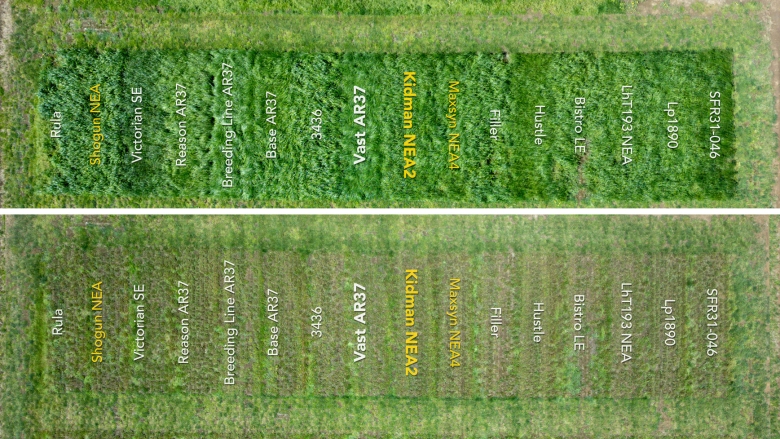
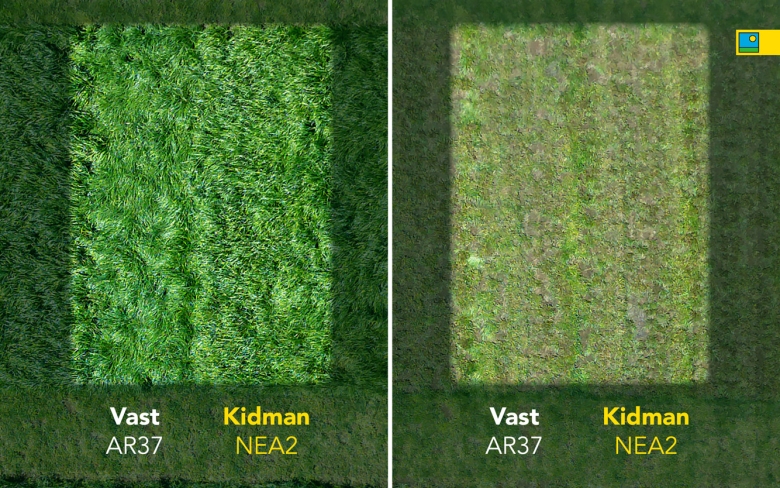
This observation is critical. It proves that plant loss in a season this tough is an environmental reality, not a specific weakness of the NEA endophyte. When an "ultra-late" competitor type with AR37 shows similar signs of stress to other varieties, it levels the playing field. It confirms that no single endophyte is a magic shield against extreme drought and heat. However, the strong performance of Array and 4front proves that NEA2 is right up there with the best available technology in terms of persistence.
The 'Magic' is in the Combination
This brings us to our core philosophy at Barenbrug: One endophyte alone is not the answer.
For too long, the industry conversation has focused heavily on the endophyte strain itself—NEA2 vs AR37 vs AR1. While the strain is important, it is only half the story. The endophyte relies on the host plant for nutrition and shelter, while the plant relies on the endophyte for protection. They are a biological partnership.
If you put a strong endophyte into weak plant genetics, the pasture will eventually fail because the grass cannot handle the agronomic stress. Conversely, strong genetics with no endophyte protection will likely be wiped out by pests.
The solution lies in the combination balance.
Why Genetics Drive the Bus
The genetic traits of the grass determine:
- Yield potential: How much feed is grown.
- Seasonality: When that feed is available (winter growth vs spring flush).
- Quality: The metabolizable energy and protein levels.
- Root depth: The ability to access deep soil moisture.
Why Endophytes Provide the Armour
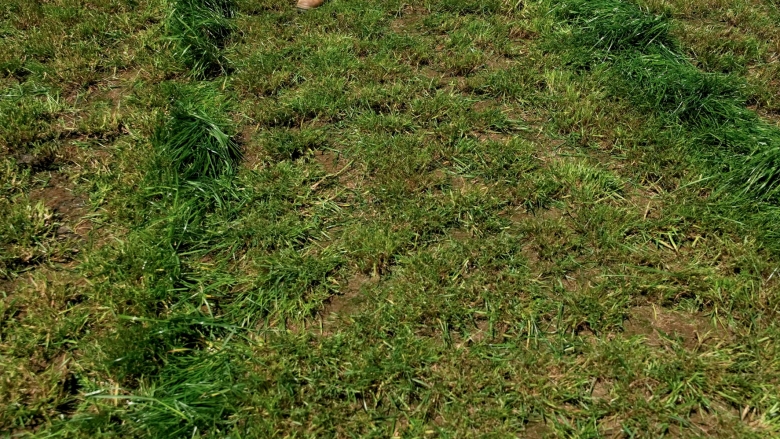
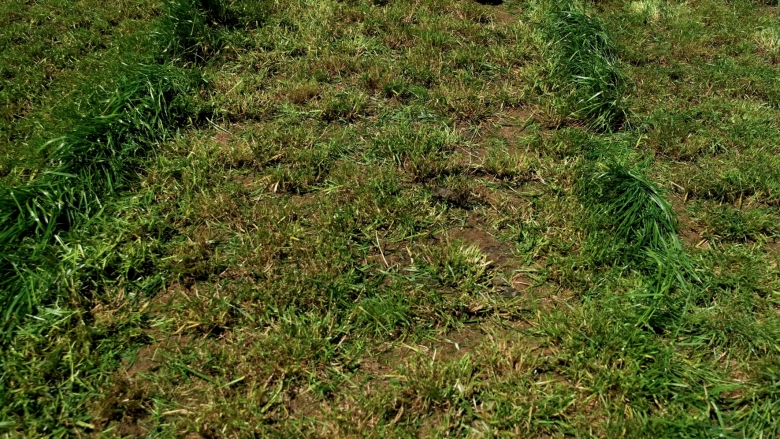
The endophyte provides the defence system. In the Ellinbank trial, plots with low or no endophyte had "opened right up." The bare earth was visible where the grass had simply vanished. This was due to a trifecta of pest pressures identified at the site:
- African Black Beetle
- Pasture Mealy Bug
- Root Aphid
These pests attack the plant from the root and base. Without the alkaloid protection provided by a beneficial endophyte like NEA2, even the best grass genetics become an easy meal.
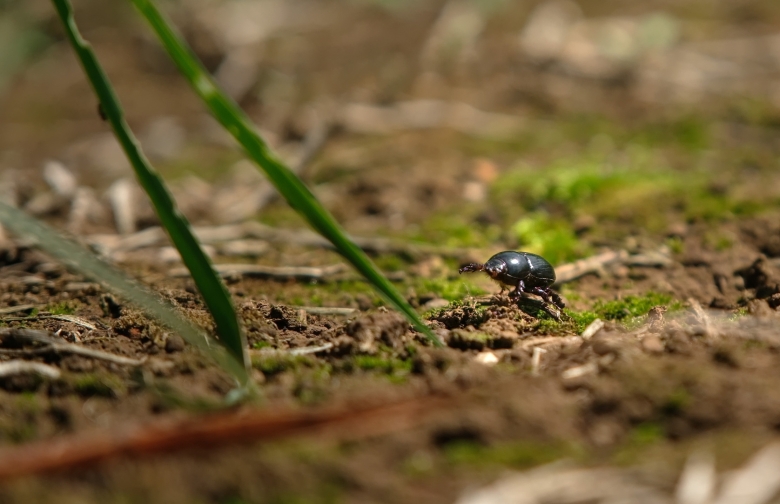
Our breeding program spends years selecting not just the best grass and the best endophyte, but the best pairings. We ensure that the NEA2 endophyte is compatible with the Array ryegrass, enhancing its natural strengths without causing detrimental animal health issues.
Understanding NEA2: A Balanced Approach
The NEA2 endophyte is a specific strain selected to provide a balance that older "standard" endophytes could not achieve.
Historic standard endophytes were great for persistence but terrible for animal health, causing issues like ryegrass staggers and heat stress due to high levels of toxic alkaloids (Lolitrem-B and Ergovaline).
NEA2 is different. It belongs to a generation of Barenbrug’s "beneficial endophytes" that offer:
- Good Insect Control: It produces alkaloids that deter pests like the African Black Beetle and Root Aphid, protecting the plant's root system and persistence.
- Animal Safety: It has a very low to no risk profile for animal health issues compared to standard endophytes. It provides excellent animal performance without the severe staggers associated with wild-type strains.
The success of Array and 4front in the PTN trials validates this technology. We are seeing high persistence and high insect tolerance without compromising the health of the livestock grazing it.

The Visual Proof
In the video footage and photographs from the trial, the contrast is stark.
You can see the low/no-endophyte plots that have succumbed to the pressure—gappy, open, and inviting weed invasion. In comparison, the beneficial endophyte plots are a "carpet" of green.
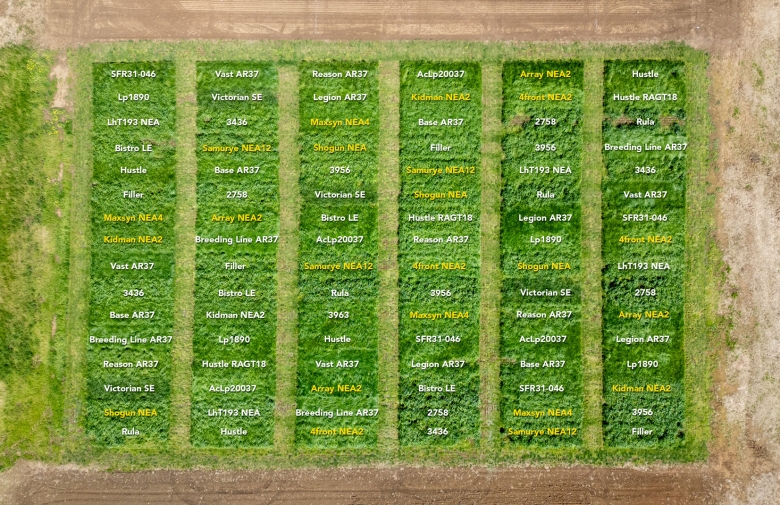
Before the plots were harvested, the cover was heavy and dense. This density is the number one indicator of a pasture's future potential. A dense sward captures more sunlight, suppresses weeds, and recovers faster after grazing.
The drone photos taken from above reinforce this on a macro scale. The plots with beneficial endophytes stand out as solid blocks of feed.
Making the Right Choice for Your Farm
The chatter in the market is just that—chatter. The data from the Pasture Trials Network provides an independent, verified source of truth.
The 2024 season was a harsh teacher, but it taught us that:
- NEA2 persists: It handles moisture stress and pest pressure effectively.
- Genetics count: Varieties like Array and 4front are bred for these conditions.
- Synergy wins: It is the combination of the grass and the endophyte that delivers the result.
Don't be swayed by marketing that focuses on a single component of the pasture system. You need a holistic solution. You need a variety that fits your rainfall, your soil type, and your grazing management, paired with an endophyte that handles your local pest spectrum.
Next Steps
Navigating the world of endophytes and grass varieties can be complex. There are new strains entering the market and plenty of noise to filter through.
We encourage you to educate yourself and seek tailored advice. Talk to your local agronomist or reseller. Reach out to your local Barenbrug Territory Manager. Let's look at your specific farm challenges and select the grass-endophyte combination that is proven to perform in your paddock—not just in a brochure.
Ready to select a pasture that persists? Contact your local Barenbrug representative today to discuss the right combination for your farm.