
SARDI 7 Series 2
Adapted to the Australian climate to perform well in both dryland and irrigated systems.
-
Improved tolerance to cool, wet environments
-
Persists in acidic soils to pH 5.0 Ca
-
Broad crowns and fine stems which result in high quality forage

Versatility, broad adaptation and persistence make SARDI 7 Series 2 the market leading winter active lucerne variety.
It has been bred specifically for adaption to the Australian climate and will perform well in both dryland and irrigated systems. SARDI 7 Series 2 is ranked higher for persistence than most other commercial cultivars in Australian trials.
Persistent where high producing lucerne stands are required and in grazing situations where winter produced feed can be utilised. It is suited to direct grazing or hay and silage production and can be sown in pasture mixes or under-sown in cropping systems. In addition, SARDI 7 Series 2 will perform well in dairy, beef and sheep production systems in high rainfall zones where dormant or semi-dormant varieties have traditionally been grown. It will persist and produce more dry matter than winter or semi-winter dormant varieties delivering more feed during the winter months when feed is in demand.
Key Features
- Dual purpose, grazing and/or hay systems
- Specialist hay production in cool winter environments
- Performs well in dairy, beef and sheep production systems in high rainfall zones
- Delivers more feed during the winter months
- Grazing tolerant due to ‘in field’ selection
- Winter Activity 7
- Dual strain Rhizobia
Benefits of sowing SARDI 7 Series 2
- Excellent disease/pest package
- Broad adaptability into all Australian lucerne growing regions
- Superior establishment, growth and persistence in acidic soils down to pH 5.0 Ca
- Improved tolerance to cool, wet environments
- Broad crowns and fine stems leading to high quality forage production
Breeding History
SARDI 7 Series 2 was developed using multiple cycles of selection for persistence and yield on Australian commercial farms under a range of farming systems (cattle, sheep, hay, dryland and irrigation). This process was combined with intensive screening for reduced stem thickness and leafiness plus tolerance to bluegreen aphid, spotted lucerne aphid, anthracnose and phytophthora root rot. This makes SARDI 7 Series 2 produce high quality forage with greater persistence.
- Agronomy & Management
Through work conducted by Meat and Livestock (MLA), SARDI 7 Series 2 has shown improved tolerance to acid soils (pH >5.0 Ca). Superior AgriCote technology now includes 2 strains of rhizobia which further enhances its performance in acidic soils.
Plot Density
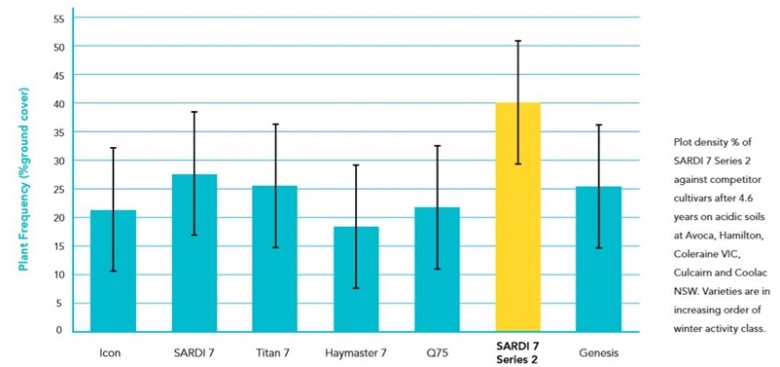
SARDI 7 Series 2 demonstrates superior ‘in field’ persistence against competitors in acid soils (pH < 4.8Ca).


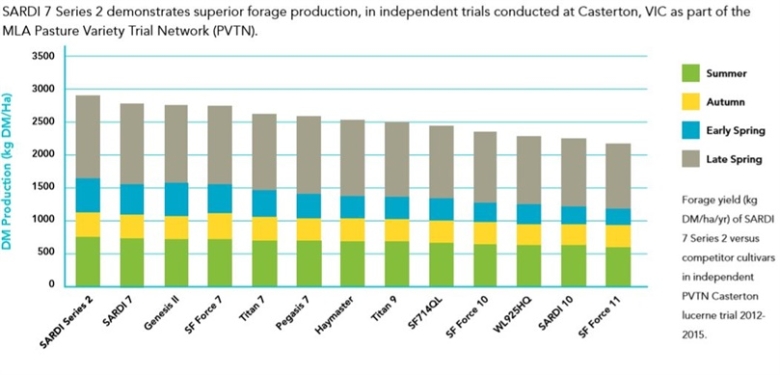
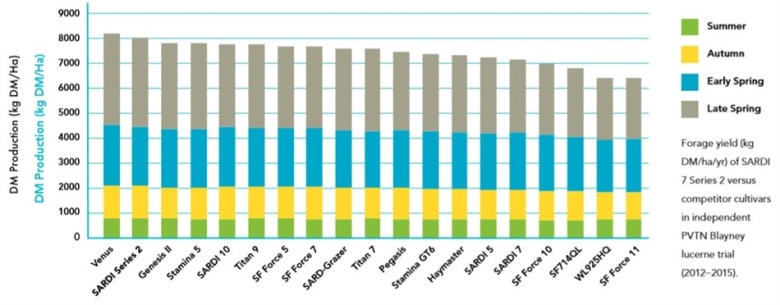
SARDI 7 Series 2 demonstrates superior forage production, in independent trials conducted at Casterton, VIC as part of the MLA Pasture Variety Trial Network (PVTN).

Pest and Disease Resistance
SARDI 7 Series 2 has very high levels of resistance to the pest and disease strains present in Australia. SARDI varieties are screened using new strains of virulent pathogens collected from field sites – this breeds resistance to the ever changing challenges that lucerne varieties will face. To deliver increased tolerance to cold, wet environments, the majority of the parentage comes from field selections in Victoria and New South Wales.


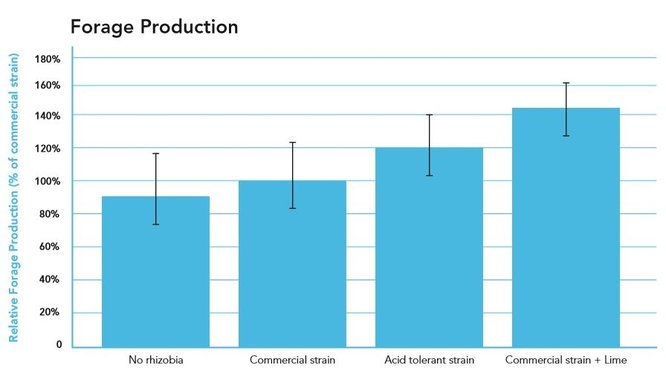
The acid tolerant strain in low pH soils can lead to improvements in forage production. Nevertheless, commercial applications of lime to adjust for pH has the best overall benefit to forage production. (Source: Ross Ballard SARDI)
In Field Nodulation

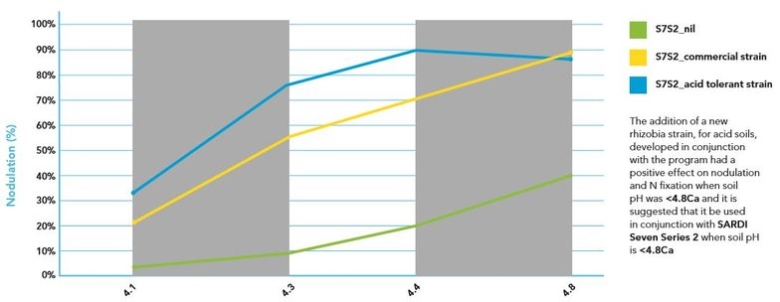
The addition of the acid tolerant rhizobia strain (in addition to normal rates of traditional strain) increases the base CFU count on the seed, resulting in symbiosis to form between rhizobia and plant, with the most suitable & adaptable strains for the soil pH. As can be seen above the acid tolerant strain improves nodulation when pH is less than 4.8 Ca. In paddocks that have been limed, there is likely to be significant variation across paddocks that having multiple strains will help combat.

Specifications
| Name | Value |
|---|---|
| Soil type | Deep well drained |
| Rainfall requirement (min) | 350mm |
| pH | 5.0-8.0 |