Annual Clover Seeds

Annual clover offers a range of grazing, hay and silage options with multiple benefits including nitrogen fixation, weed control rotations and disease breaks.
The addition of annual clovers to grass or hay mixes can increase feed quality, protein of feed and provide nitrogen for subsequent grass or cereal to grow.
Paddock and Grazing Management
Annual clovers are suited to rotational grazing. When used in a mixed sward, graze to manage grass but ensure animals do not re-graze areas, as this will greatly affect the recovery of annual clover. In pure stands, avoid grazing in the middle of winter. Don’t graze below 5 – 8cm to allow maximum recovery. Avoid pugging.
In general, the growth period between grazing will be around 50 – 60 days in winter and 30 – 40 days in spring. These clovers are generally annual options only,
however hard seeded varieties (e.g. balansa) can be locked up just prior to flower initiation. They will then flower and set seed, and providing there is initial dry matter, graze hard prior to the autumn break to allow maximum germination.
Monitor stock – especially relating to issues such as bloat and excess protein. Certain weather conditions, lack of fibre and other energy sources can cause some
stock health issues. Remove stock during such times. Allow access to good quality water.
- Balansa Clover: 2 – 5 kg/ha (in a mix)
Annual legume for medium rainfall areas that suits most soils of acid - neutral pH. Tolerates mild salinity and some waterlogging. Suitable for grazing and fodder conservation with fair winter growth. It is very early flowering and seed set can be affected by spring frosts.
Often used as part of a high density legume mix as the earliest flowering component. Also useful as an alternative to sub-clover in perennial pastures, or to add bulk and quality to annual and Italian ryegrass hay crops. Regenerates by re-seeding. Hard-seeded.
- Persian Clover: 2 – 5 kg/ha (in a mix)
Annual legume for medium rainfall areas that suits most soils of neutral-moderately alkaline pH. Tolerates mild salinity and some waterlogging. Suitable for grazing and fodder conservation with fair-good winter growth.
Also useful as an alternative to sub-clover in perennial pastures, or to add bulk and quality to annual and Italian ryegrass hay crops. Regenerates by re-seeding.
Hard-seeded (ssp. resupinatum) and soft-seeded varieties (ssp. majus) available.- Arrowleaf Clover: 2 – 5 kg/ha (in a mix)
Annual legume for medium rainfall areas that suits well drained soils of acid-neutral pH and tolerates mild salinity. Suitable for grazing and fodder conservation with fair winter growth. It is very late flowering and seed set can be affected by drought.
Often used as part of a high-density legume mix as the latest flowering component. It is also useful as an alternative to sub-clover in perennial pastures, or to add bulk and quality to annual and Italian ryegrass hay crops. Not known to cause bloat. Regenerates by reseeding. Hard-seeded.
- Other Clovers
Berseem Clover 2 – 5 kg/ha (in a mix)
Annual legume for medium-high rainfall areas that suits medium-heavy soils of neutral - moderately alkaline pH. Suitable for grazing and fodder conservation with reasonable winter growth. Can be affected by frosts. Often used as part of a high density legume mix and can produce multiple hay cuts.
Regenerates by reseeding. Soft-seeded.Crimson Clover 2 – 5 kg/ha (in a mix)
Low pH tolerant annual for medium rainfall areas with well drained soils. Suitable for grazing and fodder conservation with reasonable winter growth.
Traditionally used as a pioneer plant on acid soils of limited fertility.
Regenerates by re-seeding. Softseeded.Rose Clover 2 – 5 kg/ha (in a mix)
Early flowering annual legume that suits hard-setting acidic soils in low rainfall areas. Often used as a pioneer plant where early flowering and seed set is useful. It is not very productive or persistent over the longer period, but can do a job where sub-clovers and many medics struggle.
Regenerates by re-seeding. Hard-seeded.Gland Clover 1 – 3 kg/ha (in a mix)
Low pH tolerant annual for low rainfall areas in extensive grazing operations.
Regenerates by re-seeding. Typically very hard-seeded.Bladder Clover 2 – 4 kg/ha (in a mix)
Upright annual legume for low-medium rainfall areas with soils of mildly acidic - mildly alkaline pH. Suits well drained soils and is intolerant of waterlogging or
salinity. Requires careful management during flowering to allow sufficient seed-set for regeneration. May contribute to bloat in certain conditions.
Regenerates by re-seeding. Hard seeded.
Varieties to Consider

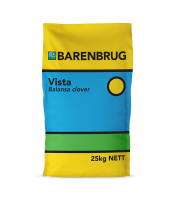
Vista
-
Late maturity (130 days)
-
Tolerant to water-logging
-
Good tolerance to cowpea, blue green & spotted alfalfa aphid
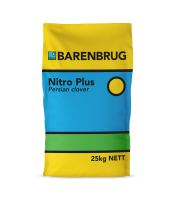
Nitro Plus
-
Prostrate to semi-prostrate, self regenerating annual clover
-
Resistant to clover scorch and phytophthora root rot
-
Tolerates mild waterlogging and mild soil salinity
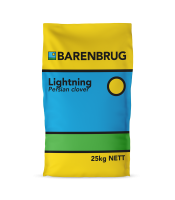
Lightning
-
Establishes quickly, even when sown late
-
Mid season maturity - about 145 days to flowering
-
Tolerates waterlogging and mild soil salinity
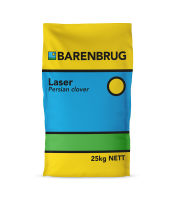
Laser
-
Late season Persian - approx 165 days to flowering
-
Improved rust resistance compared to Shaftal
-
Suitable to mix with winter active, short term ryegrass
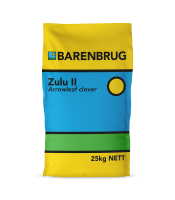
Zulu ll
-
Excellent spring and early summer growth
-
Deep tap root which can increase growth in drier seasons
-
High level of hard seeds ensures good regeneration