Picking the Perfect Rye
Maximising the productivity of your paddocks during the winter season is crucial for achieving your management goals.
Here we explore how mixed ryegrass plantings can provide valuable winter feed, while offering potential benefits in spring, particularly for extensive beef systems.
Coastal Overseeding
Sub Tropical coastal regions of QLD and NSW can receive a reasonable proportion of their annual rainfall in the cooler part of the year. This rainfall is often not utilised in naturalised kikuyu or unimproved pastures as temperatures are too low to drive growth of warm season grasses. This leads to a cold wet environment with severe lack of feed quantity and quality, resulting in unhappy cows going backwards and losing condition until the warmer weather and a spring flush of rain appears.
Annual ryegrass can be a very cheap and effective alternative than supplementing feed during this period, however it can be complicated to choose which variety is best for your
individual situation.
Due to the hot humid summers experienced in in this region, longer term perennial options do not succeed beyond the first year of production, so we are limited annual options.
There is a huge range within annual ryegrasses, so how do I choose the right one for my individual farm… or even particular paddock on my farm?
Selecting the Right Paddock
Any forage program is expensive, so we need to make sure we can utilise it. Choosing smaller paddocks can greatly improve your ability to get the grazing management right.
Smaller paddocks allow for better utilisation of feed grown, and more even grazing helping even regrowth of the ryegrass. It may also be worth considering temporary fencing in larger paddocks to maximimse the efficiency of planted forage.
Planting at the Right Time
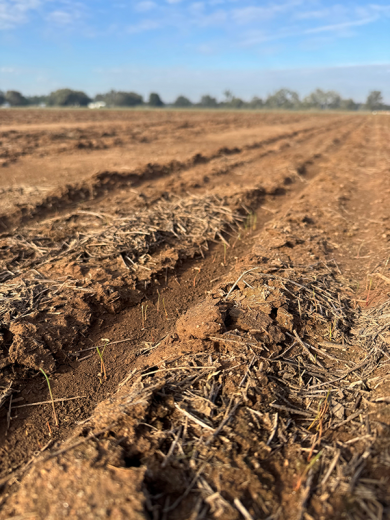
Establishing ryegrass in hot and humid conditions can be difficult if close attention isn’t paid to what the local conditions are doing.
Generally, we want to sow ryegrass when soil temperatures are dropping below 25 degrees.
If we are over-sowing into an existing stand of summer grass, we need to consider that warm soil temps will favour the naturalised grasses to continue to grow. Often some form of knockdown herbicide is the best practice to halt warm season grasses to allow the ryegrass to germinate and establish with a greater degree of success. Two mulchings of summer grasses 2-4 weeks apart can also be beneficial in setting back competition, however can be more expensive than a single spray and successive mulchings may be delayed
due to inclement weather, effectively forcing a restart of the mulching program.
Giving Your Investment the Best Chance
Use a robust sowing rate suitable for your sowing method, direct drilling with a planter should be around 25kg/ha. If spreading this rate may be significantly higher to account for seedling loss due to lack of seed soil contact.
Planting directly into soil will always give the best result, understand the risks of spreading by ground air or drone and use appropriate methods to improve soil contact of seed.
Choosing the Right Variety
By understanding when our cool season finishes, we can choose the best fit cultivar to provide the most feed possible, in the restricted window we have for growth.
If we experience hot conditions early we may be better off going for a mid-flowering variety such as Vortex, as we won’t see the long season benefit that something like Hogan (Ultra-Late) would provide in a milder climate.
Each farm will be different, but understanding how mild your springs are will put you on the right path for variety selection to get the most out of a winter forage paddock.
It is worth considering however, that a little extra spent on a later maturing variety at planting, can lead to much greater yields if the following spring is more mild than normal.
Suitability to Soil Type
One considerable differences between Annual Ryegrass's is the ploidy, which can be complicated to get your head around.
As a general rule of thumb:
- Diploid species are tougher and can handle more trying conditions,
- Tetraploids are more showy and perform better in deeper more fertile soil types.
Overall most situations we are limited by rainfall, but we can get a little more out of individual paddocks if we chose varieties that will perform well under their soil conditions.
For example, Fuze is a diploid, and can handle a range of soil types, whereas Hogan a tetraploid, while still tough may require better soil types to get optimal performance.
Mixing Ryegrass Varieties to Keep Options Open
Mixing annual ryegrass types can be a solution for the more challenging situations we find across varying regions of the coastal sub tropics.
Mixing ploidy is often the easiest way to improve a winter ryegrass result. Having diploid such as Fuze allows for dense tillering, toughness and ability to handle tougher soil types
combined with Tetraploids such as Hogan which add tetraploid feed quality and palatability can increase animal performance of an oversow paddock.
Mixing heading dates of ryegrass can be useful if unsure of season length, the above example of Fuze and Hogan would provide robust winter feed, coupled with Hogans ultra late ability to lift yield late into the season if the season shapes up softer and mild in temperature.
This can also be managed on farm by planting a variety of differing heading dates in certain paddocks, to meet management goals throughout the year.
It is often more difficult to get the grazing exactly right on mixed heading date plantings as all ryegrasses recover from grazing at different speeds at different times during the season but this is still a viable option for more extensive beef systems looking to get winter feed with potential long spring upside.