
Managing Rust in Ryegrass
From late spring through to mid-autumn, there are often reports of rust in pastures. Rusts are hosted by a number of species and spread by wind, water movement and other physical means such as fodder or animal movement.
There are two main rust diseases in ryegrass:
Crown rust (Puccinia coronata)
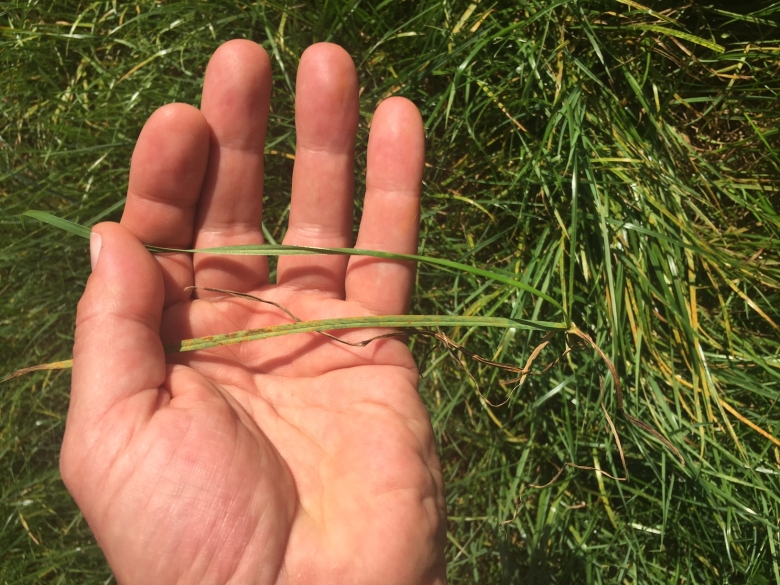
Bright orange-yellow to orange-brown pustules on leaf surfaces, usually seen from early summer to early autumn. Disease is favoured by warm, dry days, followed by dewy nights for a number of days in a row.
Crown rust may reduce dry-matter yield by up to around 40%.
Stem rust (Puccinia graminis)
Red-brown to dark brown pustules on leaves, stems and seed heads, that merge into larger lesions, usually from mid-late spring following damp mild conditions.
Stem rust may reduce yield and feed quality, although is more important from a seed production perspective.
The occurrence of rust is most usually associated with a number of factors:
- Pastures/crops declining below certain fertility thresholds, especially N and K.
- Moist, mild conditions (especially overnight)
- Leaf litter and high grazing residuals
- Cultivar susceptibility.
Fertility and pasture management
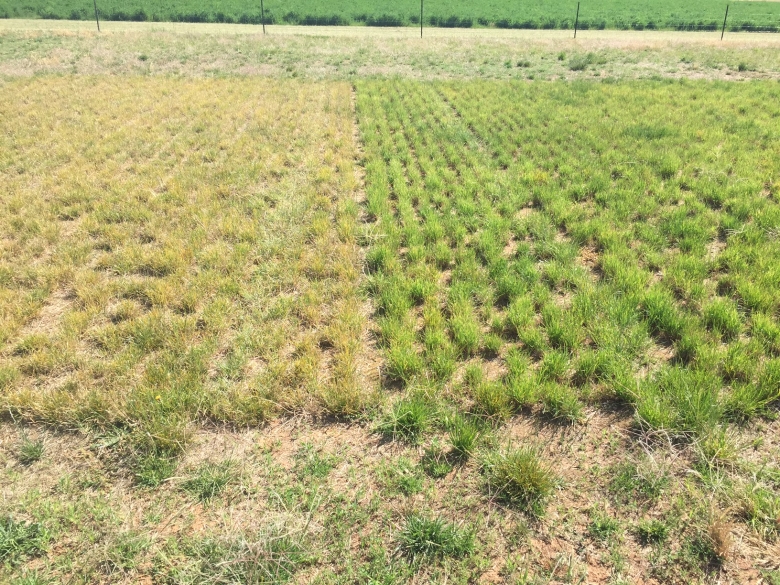
Crown rust is most usually the main concern for grazing pastures. There is a strong association with crown rust and pastures with reduced fertility. Rust will often been seen first on parts of paddocks with lighter soils, reduced soil moisture and away from fertility patches.
Fertility thresholds may also be challenged by the adoption of new, higher yielding cultivars. If a new pasture is producing say 25% more than other paddocks on the farm, attention may need to be paid to allowing for extra fertliser to acknowledge that the higher performing pasture requires more feeding. Similarly, after a good spring with higher than average silage or hay production, pastures are often seen to get rusty from mid-summer as the fertility has been consumed in fodder production. Rust is often associated with declining levels of nitrogen, in some cases potassium, and copper and zinc may also be considerations. A summer application of nitrogen fertiliser will often reduce the incidence or severity of rust and also help to grow more grass.
Delayed onset or reduced impact of rust may be effected by reducing the quantity of remnant plant material after grazing (image 4). Old plant material and high amounts of remnant leaf will be more likely to become and remain infected. By reducing the residuals through harder grazing and by speeding up the rotation, there is a better opportunity to reduce and delay rust infection.
Analyte | Desirable ppm | Rusty grass ppm | Healthy grass ppm |
|---|---|---|---|
| Nitrate | 500 - 1200 | 357 | 1255 |
| Phosphorus | 250 - 500 | 463 | 280 |
| Sulphur | 250 - 550 | 926 | 466 |
| Potassium | 3000 - 6000 | 8390 | 7160 |
| Calcium | 500 - 1100 | 1021 | 675 |
| Magnesium | 250 - 550 | 522 | 287 |
| Boron | 0.50 - 2.00 | 0.70 | 0.56 |
| Molybdenum | 0.05 - 0.18 | 0.10 | 0.17 |
| Copper | 0.50 - 2.00 | 1.10 | 0.66 |
| Iron | 4.00 - 15.00 | 4.66 | 3.70 |
| Manganese | 5.00 - 15.00 | 18.78 | 12.77 |
| Zinc | 2.00 - 5.00 | 6.14 | 5.59 |
| Sodium | 100 - 1500 | 1039 | 396 |
Table 2. Example tissue analysis of rusty and healthy tissue from the same paddock on a high production, irrigated dairy. Distinct difference in nitrate levels evident. Note the higher than optimal levels of many other analytes, due to lack of growth causing concentration effect i.e. no dilution effect due to slow growth rates. (Tas, March 2017)
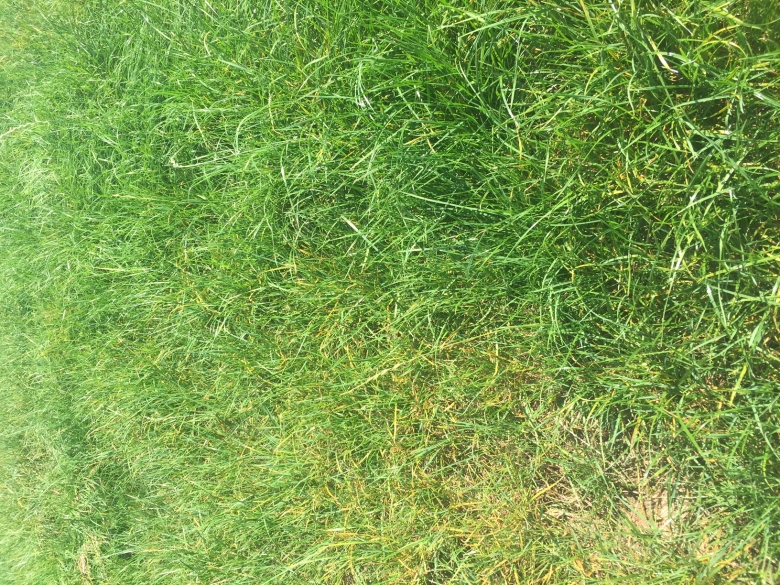
(Tas, March 2017)
Cultivar susceptibility
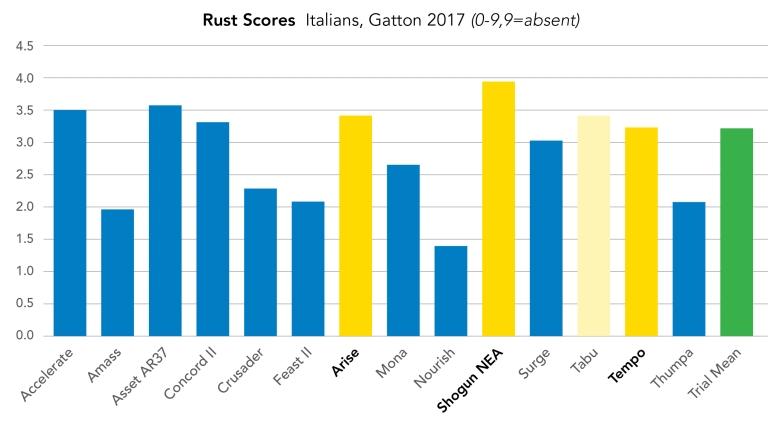
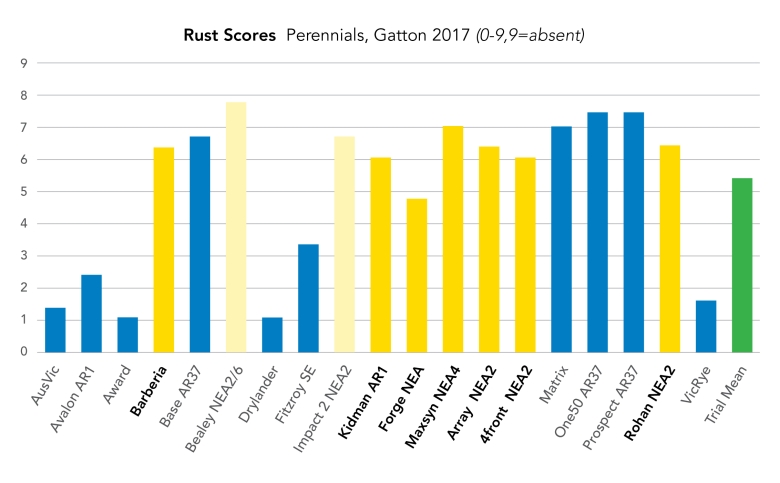
New varieties are screened for acceptable levels of rust resistance. In a seasonal rust outbreak, susceptible cultivars will be affected more readily, and in mixes pastures or from neighbouring paddocks will tend to eventually cause some level of infection on varieties that are more resistant. As the season progresses, and if pastures have large amounts of old litter or remnant leaf material, the infection may worsen. All cultivars seem to eventually attain some level of infection. The management of grazing residuals and fertility will help to minimise the impact of rust. Cultivars with good early season rust resistance will help to mitigate the disease and assist with management time-frames for response.
Rust scores for Barenbrug ryegrasses
Varieties to consider:
Forge NEA
-
Highly recommended for ryegrass systems
-
Improved performance over perennial options
-
Exceptional winter and early spring yield
4front NEA2
-
Ideal for cool season race tracks
-
Dark attractive colour
-
Excellent root development
Maxsyn NEA4
-
Unrivalled forage production for more low cost ‘home grown feed’
-
Fill critical feed gaps in both autumn and spring
-
Mid-late flowering
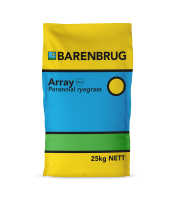
Array NEA2
-
Very late flowering (+23 days)
-
Excellent late spring and summer growth
-
High quality silage production