Ryegrass Seeds

All About Ryegrass
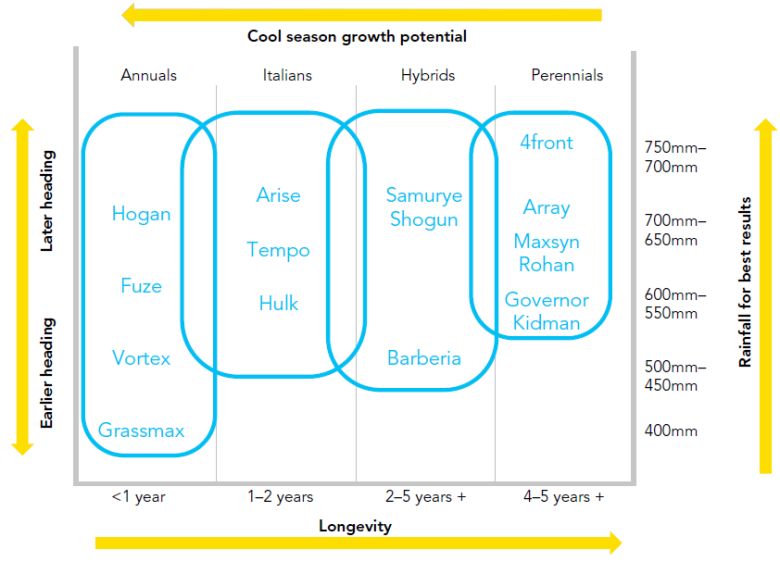
There are four main groups of ryegrass:
| Group | Life-span | Best For |
|---|---|---|
Perennial | 5 – 8 years+ May only last a few years under some conditions | Areas with a more distributed rainfall pattern or irrigation and milder summers where they form the basis of a long-term pasture feed-base. |
Italian x Perennial Hybrids | 1 – 2 years 2 – 3 years 3 – 5 years | Work well where multiple years are required with very good autumn and winter growth, and the persistence of true perennial ryegrass may be unreliable. Also excellent for over-sowing. |
Italians | 18 months – 2 years Under favourable conditions although typically one year under most systems | Areas where late spring growth is reliable, or where summers are mild and a second year may be required. Very useful for over-sowing into existing pastures as a boost for a year or two. |
Annuals | 8 – 11 months When autumn sown | Annuals are popular in areas with winter dominant rainfall and dry, hot summers, or for a quick winter feed prior to spring cropping. |
From Seed to Success
All ryegrass will propagate from seed, however the more perennial characteristics the variety has, the greater its ability to self-regenerate from vegetative daughter tillers.
True annual ryegrass does not have this ability, whereas true perennials have a large capacity to reproduce through tillering. Therefore as the capacity for vegetative tillering increases, the potentially longer-lived the plant.
Italian ryegrass and hybrids are intermediate types in this respect. In situations with hot and dry summers, vegetative tillering will be reduced or non-existent, hence perennial ryegrass may not persist well enough to be an option.
Understanding Ryegrass Heading Dates
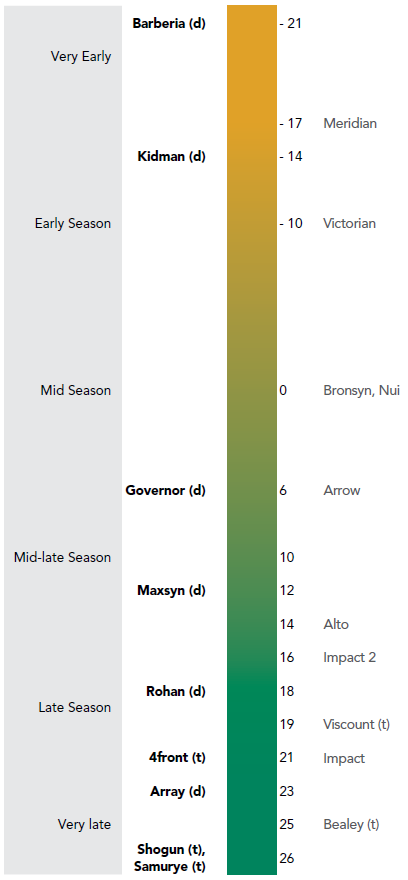
This term refers to the relative maturity of a variety - When the grass becomes reproductive and sends up flowering tillers.
As a rule, the earlier the heading date, the more late winter growth potential and a more pronounced spike in spring growth.
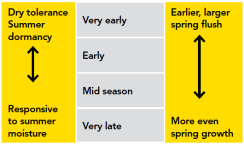
Early heading types are more suited to areas where the spring conditions may become hot and dry early. Once they have flowered they will typically stop producing unless there is follow up moisture. This is a useful survival strategy for ryegrass in drier extensive grazing areas. As a grass starts to become reproductive and runs to head, the relative pasture quality is reduced as the plant accumulates more cellulose and lignin. Stalky pastures with lower proportion of leaf have reduced quality and animal performance is reduced.
Conversely, it is typical for late-heading date varieties to exhibit relatively less winter growth, although this is now changing with some of the newer late varieties offering very good winter yields. Later varieties have a longer but steadier spring flush, thus allowing for greater flexibility and extended pasture quality into early summer.
It is often beneficial to have a range of pasture maturity dates on farm:
Early Varieties
• Suit paddocks or locations that typically finish earlier e.g. lighter soils, north facing slopes, lower rainfall
• Maximise the potential from rain-fed (dryland) production with an early spring flush
• Likely to complement later paddocks by providing comparatively more feed in late winter/early spring
• Allow for allocation of paddocks for fodder conservation, with later paddocks being grazed
• Often can be considered for sites with shorter growing seasons or where lower input costs are justified.
Later Varieties
• Suit sites where the spring season holds on longer
• Offer higher feed quality and animal performance, over an extended period
• Maximise the potential value from summer irrigation or moist summer conditions
• Potentially spreads the silage/hay season risk and workload
• More usually suited to sites where higher outputs are being targeted
• Often considered more easily managed to maintain spring and summer quality.
Aftermath Heading
Increasingly, ryegrasses are selected to have as narrow a heading period as possible. For example, they are selected to run to head all at once, and then stop.
This is termed ‘low aftermath heading’ (AMH).
If a variety has an extended flowering period, then the quality of the pasture is lower for a longer period due to the stalk content.
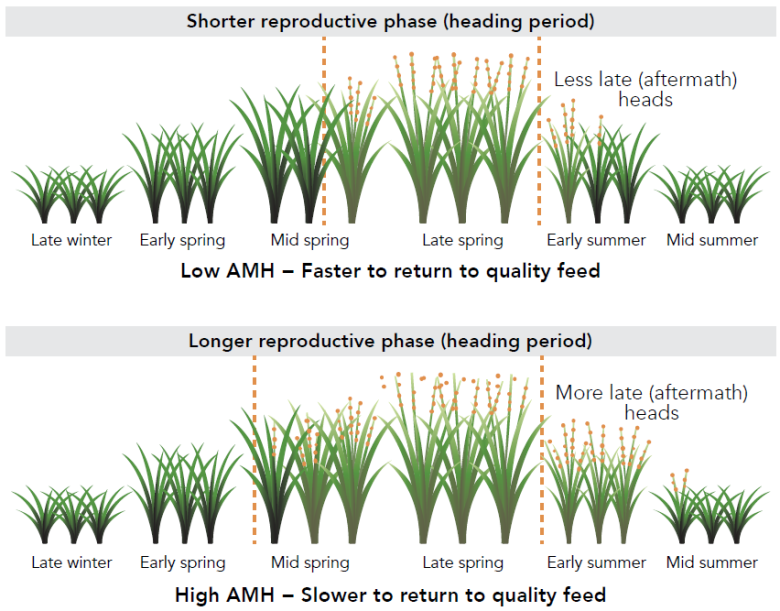
This explains part of the persistence of older type ryegrasses in some more mature pastures: it is not the original plant that survives, but the capacity for the stand to re-seed over a long flowering period, with lax grazing or through hay cutting. Nowadays, grass is more often conserved as silage, less frequently taken for hay and varieties are generally selected for low AMH.
This means that to obtain true long-term perenniality, the grass must be managed to reproduce from its tillers.
This can be encouraged by selecting the right variety for the conditions. Measures should include good grazing management, particularly in spring, appropriate
fertility, and not grazing when the paddocks are going through stress such as drought or waterlogging.
The Difference Between a Diploid and Tetraploid
Ryegrass is naturally a diploid, meaning it has two sets of chromosomes. Some varieties are tetraploids: artificially developed by plant breeders to have four
sets of chromosomes. This practice was first developed in Holland in the 1960s and has since become common in plant breeding. The practice does not involve gene modification.
Tetraploids have larger seeds (nearly double the size of standard diploid types), and because of this a higher sowing rate is required. Plants of tetraploid varieties are also larger with wider, darker leaves, lower number of tillers, and fewer, but thicker roots. Tetraploiding in perennial ryegrass has been found to increase palatability and can increase feed value.
| Diploids | Tetrapolids | |
|---|---|---|
Features |
|
|
Benefits |
|
|
Disadvantages |
|
|
ME = Metabolisable Energy
Applications
- Perennial Ryegrass: 15 – 30 kg/ha
In the higher rainfall and irrigated regions of southern Australia, perennial ryegrass is the grass of choice for permanent pastures. It is relatively easy and quick to establish and easy to manage, although it struggles under high summer temperatures and needs appropriate management to ensure long term persistence.
Perennial ryegrass stablishes rapidly, yields well, tolerates a range of management practices and has high feed value
Perennial ryegrass It is compatible with a range of legumes offering an excellent all round pasture for grazing systems Barenbrug's ryegrasses with endophyte technology and staggers free are now readily available.
- Hybrid Ryegrass: 15 – 30 kg/ha
Hybrid ryegrasses tend to fall between Italian and perennial ryegrasses in growth potential and persistence.
They provide better winter production than perennial ryegrass and are best used in mild summer areas where they may persist for 2 – 5 years depending on the breeding and selection criteria.
Hybrid ryegrasses are generally produced by plant breeders crossing Italian ryegrass with perennial ryegrass. Plant breeding for this category may be directed towards either a high percentage of Italian (75% or more) or alternatively a high proportion of perennial parentage (75% or more). This results in a great range of hybrid types available, with varying levels of merit for longevity or performance.
Consider that well developed hybrid ryegrasses with 50% or more Italian parentage may offer one or two years’ worth of extra longevity when compared to an
Italian ryegrass under similar circumstances.A hybrid developed with a high percentage of perennial parentage will likely persist for 3-5 years under suitable management and offer significantly more production in that time-frame where perennial pasture my not be desired or, perennial ryegrass typically fails to persist satisfactorily.
As hybrids are often used under intensive input/output production systems, good management and fertiliser practices need to be applied for best results. Take care to select the right category of hybrid ryegrass to meet expectations.
- Italian Ryegrass: 15 – 30 kg/ha
Italian ryegrass is used as a highly productive short term pasture option in areas with mild summers or where late season rains offer pasture growth into late spring and early summer. It is also well suited to over-sowing into run-down pastures and may be spring sown in areas where summer moisture is reliable. Some farming operations over-sow annually or biennially to maximise the benefits of strong cool season growth with late season quality.
Italian ryegrasses are an excellent option for silage and hay production, often offering two or more cuts under ideal conditions.
Italian ryegrass can persist for 2 – 3 years in summer mild areas under irrigation or reliable summer rainfall.
In summer dry areas it will continue to produce quality feed through spring and into summer, giving it an advantage over annual ryegrasses. Italian ryegrass should not be sown as part of a permanent pasture as it will compete with perennial species, then thin out over time out allowing weed ingress.Barenbrug's Italian ryegrasses will not cause staggers.
- Annual Ryegrass: 20 – 35 kg/ha
Annual ryegrasses are sown for a high quality short-term winter crop, providing multiple grazings in winter and spring. Hence annual ryegrass is generally used for a 6 – 9 month winter crop prior to sowing a summer crop, or to make the most of a growing season rainfall where late season rain is unreliable.
Annual ryegrass exhibits the greatest winter growth potential of all the ryegrass types.
Including annual ryegrass when sowing a permanent pasture is not generally recommended. These tend to die out, allowing weeds to take over. They also establish rapidly and compete strongly with perennial species.Annual ryegrasses are a good option for fast winter feed, silage and hay production. They may also be used as a quick over-sowing option to extend the life of a run-down pasture for an extra season. Companion species may include forage cereals and annual clovers.
- Other Ryegrasses
Wimmera Ryegrass
Wimmera is still occasionally used as a hardy, cheap annual feed. It has the ability to set and regenerate seed readily and suits some areas with a short winter
growing season. Wimmera is common in low rainfall areas with opportunistic pastures that are usually summer dry.Wimmera tends to be the main ryegrass weed found in cropping rotations and is the host of Anguina nematode that can lead to a livestock illness Annual Ryegrass Toxicosis (ARGT). Wimmera is rarely recommended for pastures in modern times.
Festulolium
This term is loosely applied to varieties that are the result of crossing ryegrass with various types of fescue.In practice festulolium varieties are managed in the same manner as respective ryegrass types. Italian, hybrid and perennial analogues are available, however
there is emerging evidence that the proportion of fescue component is relatively small and potential benefits seem at best marginal or indeed rarely manifest.
Varieties to Consider
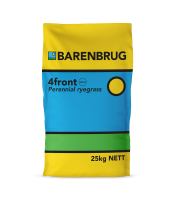
4front NEA2
-
Tetraploid perennial ryegrass for high performance
-
Late to very late flowering for retained feed quality
-
Provide long term pasture for highest productivity
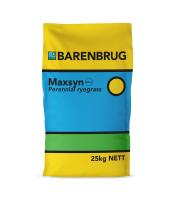
Maxsyn NEA4
-
Unrivalled forage production for more low cost ‘home grown feed’
-
Fill critical feed gaps in both autumn and spring
-
Mid-late flowering
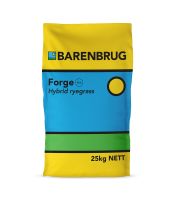
Forge NEA
-
Highly recommended for ryegrass systems
-
Improved performance over perennial options
-
Exceptional winter and early spring yield
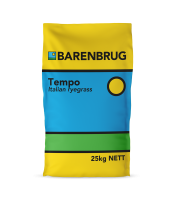
Tempo
-
Faster to establish than other Italian ryegrasses
-
Rapid establishment with good winter growth
-
Suitable for grazing, hay or silage
Samurye NEA12
-
Partnered with NEA12 endophyte for improved pest tolerance and yield production
-
Use a sole grass high performance pasture
-
2–4-year pasture
Arise
-
High forage yield
-
Quick establishment for early feed
-
Capable of multiple grazings
Array NEA2
-
Very late flowering (+23 days)
-
Excellent late spring and summer growth
-
High quality silage production
Kidman NEA2
-
Excellent autumn, winter and early spring growth
-
Leafy summer production
-
NEA2 endophyte offers broad insect protection
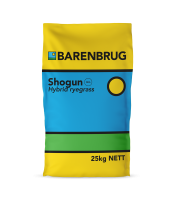
Shogun NEA
-
Very strong establishment vigour
-
Improved persistence over other hybrid ryegrasses
-
Reliable 3–4 years of production
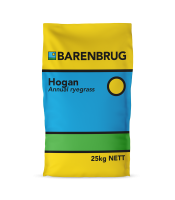
Hogan
-
Late season quality and re-growth
-
Very late maturing tetraploid annual ryegrass
-
Superior total forage yield in high rainfall areas
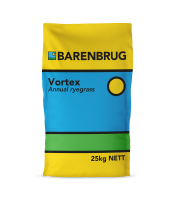
Vortex
-
Performs well in hot environments due to Australian selection pressures
-
Adaptable & reliable performance across a wide range of environments
-
Excellent establishment vigour
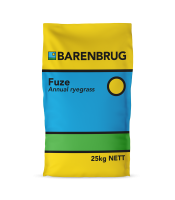
Fuze
-
High winter production
-
More home-grown feed
-
Suitable for grazing, hay or silage
FAQs
- What is the difference between perennial and Italian ryegrass seed?
Perennial ryegrass seed lasts several years with repeated grazing, while Italian ryegrass seed is typically short-term, offering rapid growth for seasonal feed.
- Why choose Barenbrug ryegrass over other ryegrass seeds?
Barenbrug ryegrass is locally trialled, bred for Australian conditions, and supported by global research—delivering consistent results year after year.
- Can I mix ryegrass with other pasture seeds?
Yes, ryegrass seeds work well in pasture blends with clover, chicory, or lucerne to increase forage quality and resilience.
- Is Barenbrug perennial ryegrass seed suitable for silage?
Absolutely. Our Barenbrug perennial ryegrass seed produces high-quality forage suitable for grazing and silage in temperate Australian regions.