Vetch Seeds

Vetch is a winter and spring growing annual legume that is commonly used as a disease break in cereal cropping rotations.
Vetch is often sown in combination with cereals for quality hay. Vetch hay highly sought as a fodder to support dairying due to excellent quality and palatability. It may be suitable for spring sowing in higher latitude, or southern-most cold winter areas. Common vetch may be used for grain. Vetch has the ability to improve soil fertility by fixing large amounts of nitrogen (N) to the soil, which helps to meet the needs of following crops.
It responds well to a wide range of soil types, however it does not tolerate water-logging. There are a number of different vetch species, the most useful being:
| Common Vetch | Grazing, silage, hay, grain, larger seed size, lower % hard-seeded. |
|---|---|
| Woolly-pod Vetch | Grazing, silage, hay, grain, larger seed size, lower % hard-seeded. |
| Purple Vetch | Grazing, silage, hay, grain hard-seededness varies with cultivars. (Outclassed by new common and woolly-pod types.) |
Sowing Time
As a rule of thumb, very often the best sowing window for a district coincides with barley sowing time:
• Lower rainfall, spring dry areas April – May
• Medium rainfall areas May – June
• Higher rainfall/cold winter areas June – August (or later).
Inoculation
Group E inoculant ought to be applied to seed where vetch, peas or faba beans have not been grown previously.
Sowing Rates
There is some variation in seed sizes, common vetch the largest, woolly-pod the smallest, requiring allowance for seeding rate, depending on the species being sown. Target plant densities are usually from 40 to 70 plants/m2. Cereal vetch mixes are generally about 2:1 to 1:2 w/w, depending on seed sizes, and desired outcome.
Sowing Depth
Heavier soils: 10 – 20 mm
Lighter soils: 15 – 40 mm
Grazing
There is some potential for carefully managed grazing of vetch crops. During the growing phase, allow the plant to develop secondary nodes prior to grazing,
and manage grazing such that a good number of these are preserved to provide for regrowth potential.
Common vetch may be grazed through flowering or as a standing hay crop. Woolly-pod vetch must not be grazed after pod-set.

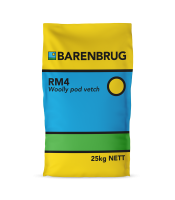
RM4
-
Can be used for hay/silage, grazing & green/brown manure.
-
Excellent early vigor which leads to better establishment
-
Long term average dry matter yield
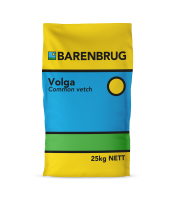
Volga
-
Very good early establishment
-
Suited to shorter season areas
-
High yielding, highly rust resistant
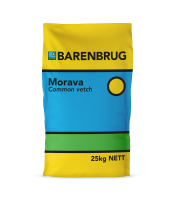
Morava
-
Resistant to Rust and tolerant to Ascochyta
-
Vigorous early plant growth and good grazing palatability
-
Improve soil health through increased nitrogen fixation